Paint color · Sherwin-Williams
Gauntlet Gray (SW 7019): Deep Warm Gray for Accents and Doors
Published
Gauntlet Gray (SW 7019) is a deep warm gray, a softened charcoal with a taupe lean that keeps it from looking cold or harsh. Its LRV, which we calculate from the RGB values, is about 17, so it absorbs most of the light that reaches it.
In Arizona that makes it an excellent accent color for garage doors, shutters, pop-outs, front doors and cabinetry, and a riskier choice for a full sun-exposed body. This page explains why, how it reads in different light, and how to pair it with lighter warm grays.
Color swatch: Gauntlet Gray SW 7019, #78736E
| Color | Gauntlet Gray |
|---|---|
| Code | SW 7019 |
| Hex | #78736E |
| RGB | 120, 115, 110 |
| LRV | About 17 (calculated from the RGB values, not Sherwin-Williams' published figure) |
| Family | Deep warm gray, charcoal with a taupe lean |
Gauntlet Gray's undertone
Its RGB values (120, 115, 110) show red slightly ahead of green and blue, which gives a warm, brown-leaning gray. Most people describe it as a deep greige or a warm charcoal.
It sits at the deep end of a run of related warm grays that includes Eider White (SW 7014), Repose Gray (SW 7015), Dorian Gray (SW 7017) and Dovetail (SW 7018). Those lighter neighbors are natural partners for a two-tone scheme.
How it looks in strong Arizona sun
Direct sun lightens it toward a warm mid-gray, so a garage door in Gauntlet Gray will look softer on a summer afternoon than on the chip. Under a covered entry or in evening light it returns to a rich warm charcoal.
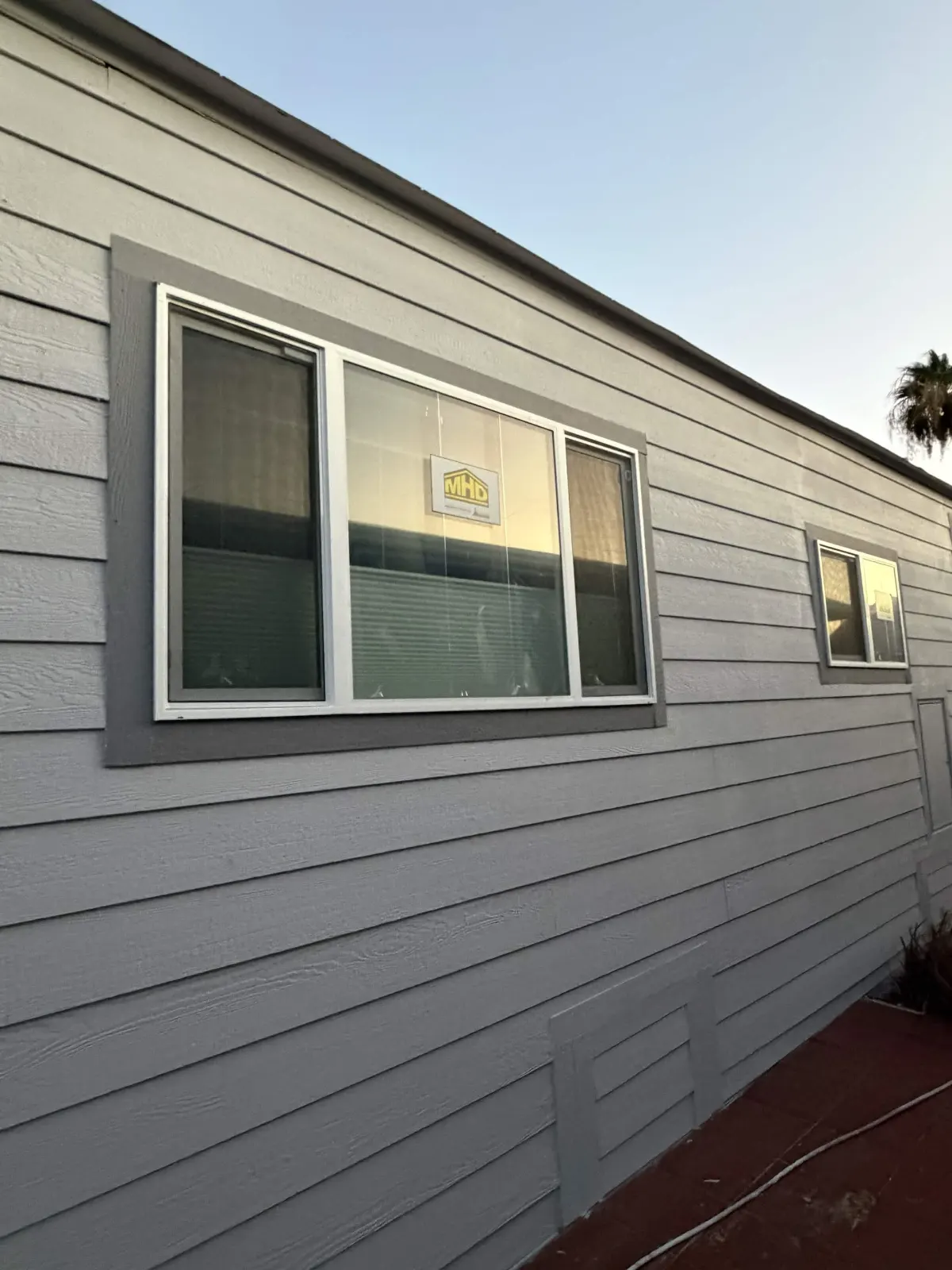
Against a light stucco body it gives strong but not harsh contrast. With tan or brown roof tile it looks warm and connected; with gray tile it reads more modern.
Heat, fading and an LRV around 17
We calculate its LRV at about 17 from the RGB values; Sherwin-Williams publishes its own figure on the color page. A surface at that level absorbs most of the sun's visible light and turns much of it into heat, so a south or west wall in Gauntlet Gray can get far hotter to the touch than a light body color.
Deep colors also show fading and chalking sooner on sun-facing surfaces, often as a lighter, dusty look. That is why we usually suggest it for doors, shutters, garage doors and smaller areas, where refreshing it is easy, rather than across every exposed wall.
Gauntlet Gray indoors
In a north-facing room it reads as a deep, slightly cool charcoal and can make the space feel enclosed. In rooms with good daylight it shows more of its warmth, closer to a dark taupe-gray.
It is a popular kind of color for kitchen islands, lower cabinets, built-ins, a media room or an accent wall behind a bed. Full rooms in this depth work best with good light, white trim and plenty of contrast in furniture and textiles.
Best roles for Gauntlet Gray
- Garage doors, shutters and pop-outs on a light or mid warm gray house
- Front doors, especially under a covered entry
- Islands, lower kitchen cabinets and bath vanities that need a grounded, warm depth
- Accent walls, offices and media rooms
- Full exterior body only on well-shaded homes, with the heat trade-off in mind
Pairings for Gauntlet Gray
- Eider White (SW 7014), a coordinating color, for trim or a light body
- Repose Gray (SW 7015), another coordinating color, as a mid-light body with Gauntlet Gray accents
- Colonnade Gray (SW 7641) for a soft warm body on stucco
- Alabaster (SW 7008) for brighter trim, and Tricorn Black (SW 6258) for hardware and fixtures
Garage doors, metal and vinyl in a deep gray
Steel garage doors in a deep color get very hot in afternoon sun, and the paint on them takes more stress than paint on stucco. Clean, degloss and prime metal properly, and use a finish suited to the surface.
Some vinyl windows, doors and trim pieces are not rated for dark paint, because they can soften or warp as they absorb heat. Check the manufacturer's guidance before painting vinyl a color this deep.
Sheen and product
For Gauntlet Gray on stucco, we use Sherwin-Williams Emerald Exterior in two coats, sprayed and back-rolled, with Loxon masonry primer on bare or patched areas. Deep colors show lap marks and uneven sheen easily, so even application matters; doors and trim look best in satin or semi-gloss.
On cabinets and accent walls indoors we use low-VOC Emerald Interior, in satin or semi-gloss for cabinetry and eggshell for walls.
Testing Gauntlet Gray
- Paint a sample board and hold it on the garage door or entry where you plan to use it.
- Check it at midday, when it looks lightest, and at dusk, when it looks deepest.
- Compare it beside your light body color so you can judge the contrast.
- If you are in an HOA, ask whether this depth is approved for your door, accents or body, and get written approval.
Frequently asked questions
- Is Gauntlet Gray a charcoal?
- It is a deep warm gray that many people call a soft charcoal. It has a taupe lean, so it looks warmer than a true charcoal.
- Is Gauntlet Gray too dark for an Arizona house body?
- A sun-baked Gauntlet Gray body runs hot and loses its depth faster than an accent would. It works best as an accent, or as a body on a well-shaded home.
- What light color goes with Gauntlet Gray?
- Eider White (SW 7014) and Repose Gray (SW 7015) are coordinating colors. Colonnade Gray (SW 7641) is another soft warm gray for the body.
- Is Gauntlet Gray a good garage door color?
- It looks sharp on a light house, but a steel door in a deep color gets very hot in afternoon sun. Proper metal prep and a quality finish help it last.
- Can I paint kitchen cabinets Gauntlet Gray?
- Yes, it is a strong choice for islands and lower cabinets. Use a satin or semi-gloss finish over well-prepped cabinets.
- Does Gauntlet Gray look brown?
- In warm evening light or under warm bulbs it can lean taupe-brown. In cool north light it reads closer to a charcoal.
- How is Gauntlet Gray different from Dovetail?
- Dovetail (SW 7018) is a lighter warm gray, with a calculated LRV of about 26 versus about 17 for Gauntlet Gray. Dovetail suits larger areas; Gauntlet Gray suits accents.