Guide · Color
Matching an Existing Paint Color When You Don't Know the Code
By the Orange Coatings team · Published
If you don't know the paint code, first hunt for it in the places it usually survives: old can lids in the garage, builder or HOA paperwork, and past painting invoices. If none turn up, take a clean, flat chip of the paint at least the size of a quarter to a Sherwin-Williams store, where it can be scanned and turned into a formula.
Even a perfect formula will not always blend into a wall that has aged for years, so the last step is deciding how much to repaint. Here is the order that saves the most time, and what to expect from each method.
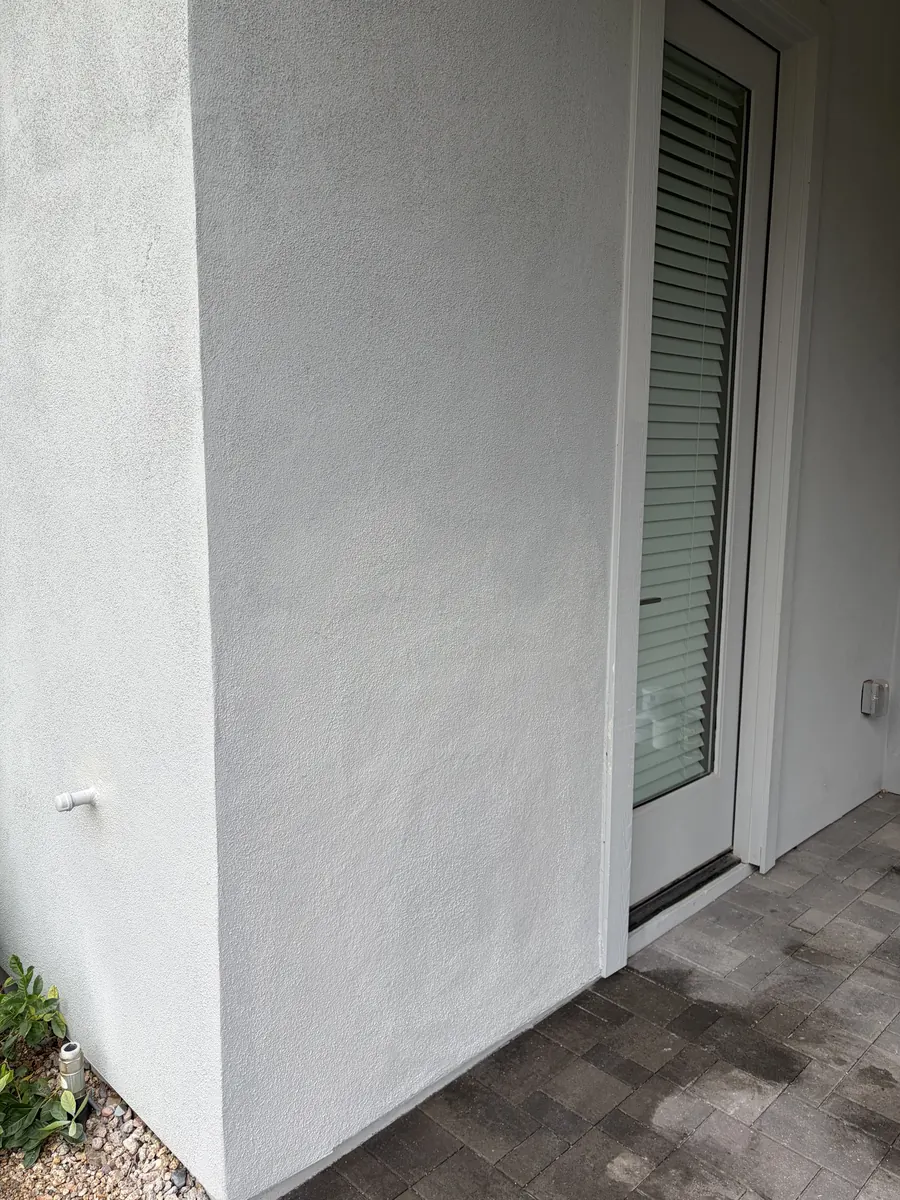
Look for the code before you cut anything
A code is better than a scan because it brings back the original formula, not an approximation. In West Valley homes the color usually survives somewhere.
- Garage shelves and cabinets: check the lid and the side label of every old can. Store-mixed paint usually has a printed label with the color name, number, product and sheen.
- Builder paperwork: many production builders give buyers a color selection sheet from the design center. Look in the closing folder.
- HOA scheme document: exteriors in most planned communities are painted from a numbered scheme listing body, trim and accent colors.
- Past invoices or emails from a painter, which often list colors and products by room.
- Inside electrical panel doors, the attic hatch or a utility closet, where some painters write the colors used.
- Previous owners or the listing agent, if the house changed hands recently.
Translating a code from another brand
Builder and HOA sheets in the Phoenix area often name colors from a different paint brand. That is fine. A code from any brand can be cross-referenced to the closest Sherwin-Williams color, or the store can mix a match from the other brand's published color. Ask for a sample and check it on the wall before buying gallons, because two brands' closest equivalents are not always identical.
Pay attention to the product and sheen on the old label too. The same color in a flat paint and in a satin paint looks different on the wall.
Getting a sample the scanner can read
If the code is gone, the store needs a physical piece of the paint. Sherwin-Williams asks for a sample about the size of a quarter or larger for an in-store scan, and its pro matching system needs a consistent color and finish, not something porous, mirrored or high-gloss.
- Pick a hidden spot: inside a closet, behind where a dresser sits or below a switch plate's footprint.
- On drywall, score a square through the paint and face paper with a sharp craft knife and lift it off, as Sherwin-Williams suggests.
- Choose an area that has the same sun exposure as the wall you want to match, not a protected corner that has stayed darker.
- For exterior stucco, pry off a flat flake from a less visible wall. Rough, sandy chips scan less reliably, so pick the flattest piece you can.
- Clean dust and grease off the chip gently and keep it flat in an envelope.
- Patch the hole afterward and paint over it with the matched color.
What the scan gives you, and its limits
Sherwin-Williams stores scan the chip and either produce a custom formula or suggest the closest existing colors. The company says an in-store scan gives the best chance of an exact match. Phone apps and photo-matching tools are useful for narrowing down a color name, but a phone camera and room lighting skew color, so treat those results as a starting point, not a formula. Sherwin-Williams' ColorSnap Match Pro uses its own light source, which is why it reads color better than a camera alone.
Before painting a whole wall, brush the new mix on a test area next to the old paint, let it dry fully and look at it at different times of day. Wet paint and dry paint can look noticeably different.
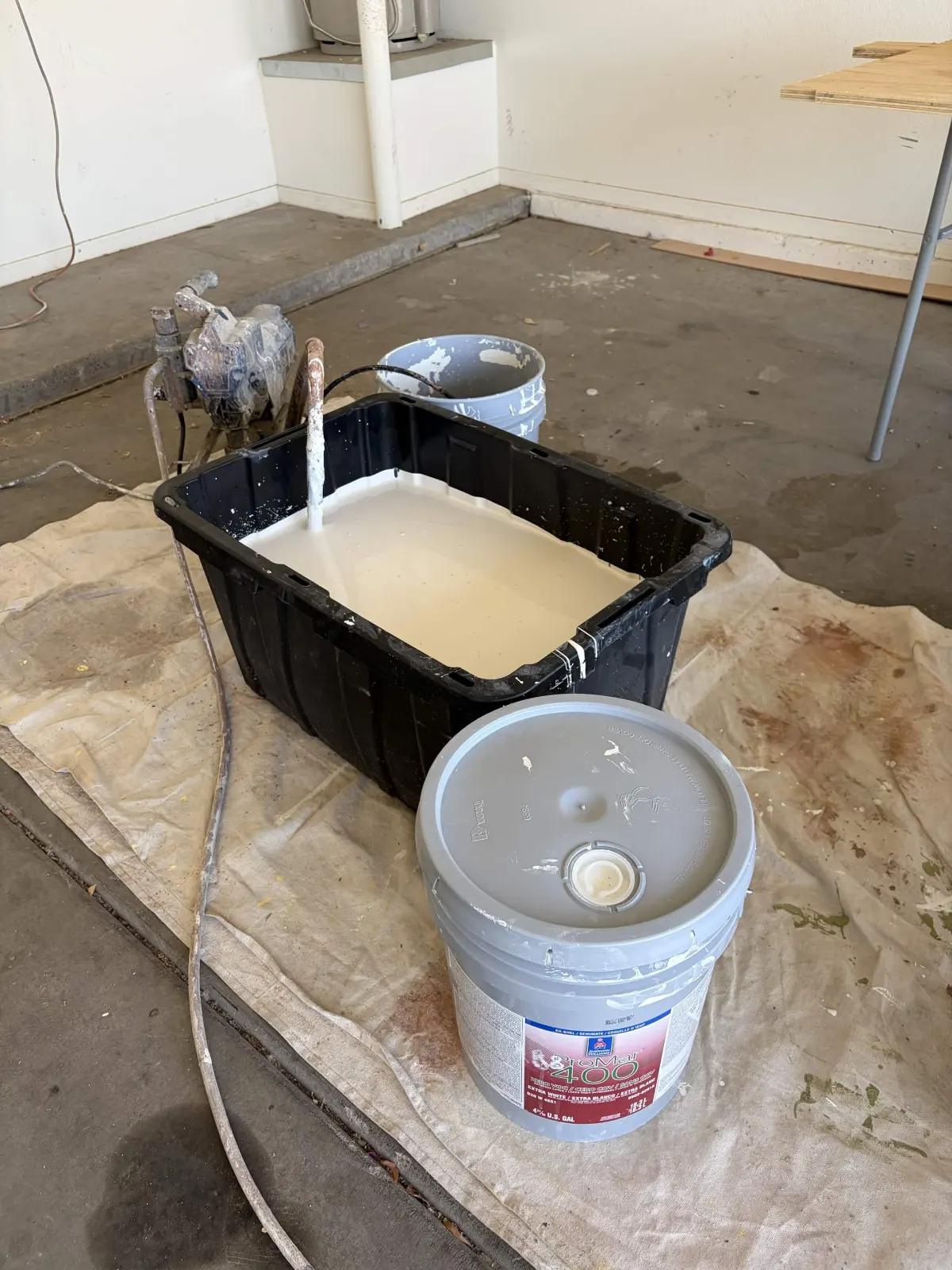
Why a perfect formula can still look wrong
Paint on a wall changes after it goes on. In Arizona that change can be large, especially outside. Sun-facing stucco fades and chalks, so a south or west wall may be several shades lighter than the same color under the patio cover. Interior walls yellow slightly with age, pick up dust and get scrubbed shiny in high-traffic spots.
So the original code can bring back the color the wall was, not the color it is now. For a touch-up, matching to the current wall from a scan of the aged paint is often closer than the original formula. For a full repaint, the original code is the better choice, because the whole surface will be new.
Sheen and application matter as much as color
A touch-up in the right color but the wrong sheen still shows as a patch. If the old label is gone, compare the wall to sheen samples at an angle to a window. Application matters too: a brushed touch-up on a rolled wall leaves a different texture, which reads as a different color in side light. Use the same tool that applied the original, usually a roller indoors and a sprayer and back-roll outside on stucco.
Spot fix or paint to the corner?
The reliable rule is to paint the whole surface out to a natural break: an inside corner, a ceiling line, a control joint in stucco, or a trim edge. The eye does not notice a slight change at a corner, but it catches a square patch in the middle of a wall right away.
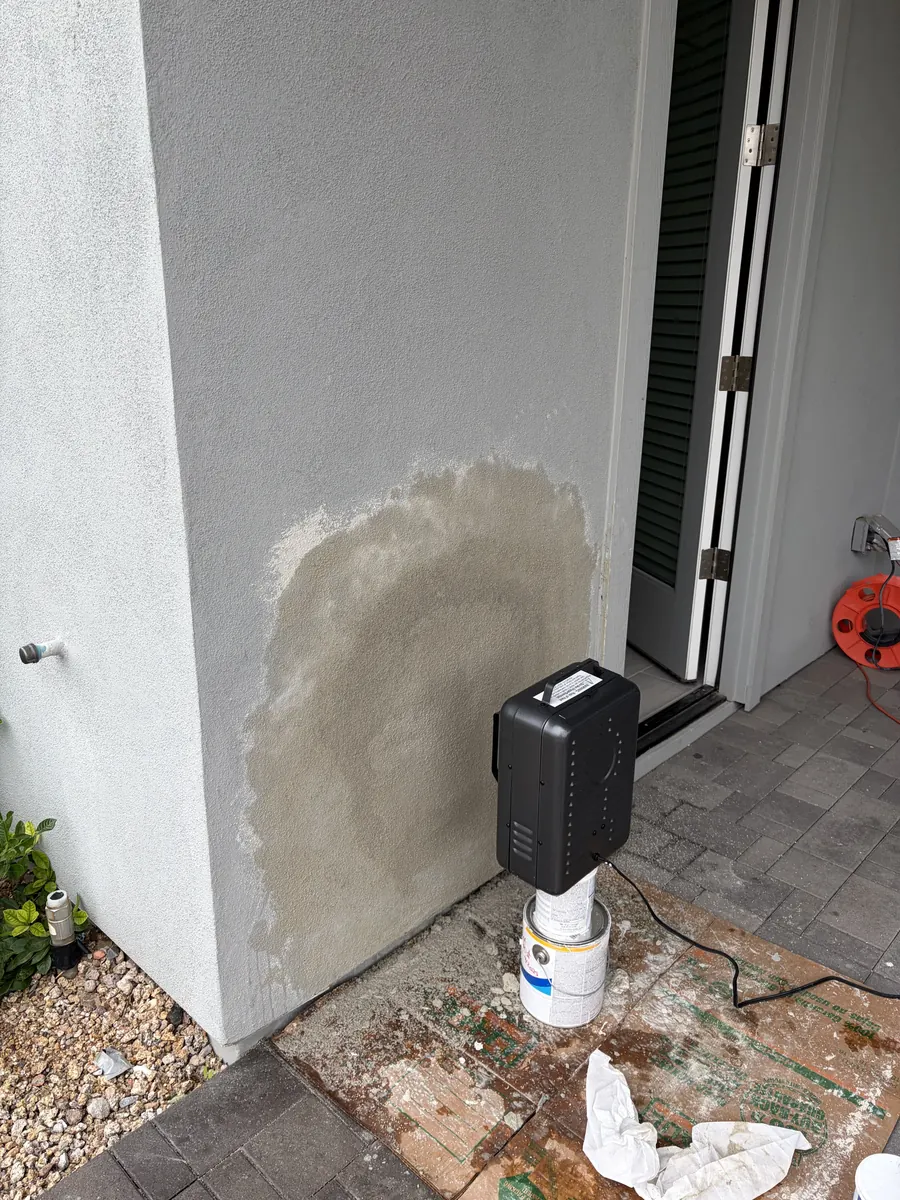
Our north Phoenix stucco repair shows the approach: the patch was textured to match, then painted to match the wall as it looks today, with the paint feathered beyond the patch edges so no outline was left.
How we handle unknown colors
If you are planning a repaint or repair and the colors are a mystery, mention it when you call. At the same-day estimate we look at what needs to match and which walls have faded, and before work starts we finalize colors and products from Sherwin-Williams lines and source the paint, including any custom matches. Exteriors get Emerald Exterior and interiors get Emerald Interior.
Frequently asked questions
- How big a paint chip does Sherwin-Williams need to match a color?
- Sherwin-Williams asks for a sample about the size of a quarter or larger for an accurate in-store scan. Flat, clean chips with a consistent color scan best.
- Can a store match paint from a photo?
- Photo tools can suggest similar named colors, but camera settings and lighting distort color too much for a reliable formula. Use a physical sample when the match matters.
- Will the original paint code match my faded exterior?
- Often not. Sun-exposed paint in Arizona fades over the years, so new paint in the original formula can look darker than the wall around it. Match to the current wall for a touch-up, or repaint the whole wall.
- Where do builders record interior paint colors?
- Check the closing paperwork or design center selection sheet, and ask the builder's customer service team. Many production homes use a standard interior color across the house.
- Why does my matched touch-up look shiny?
- The sheen is different from the aged wall, or the touch-up was brushed onto a rolled surface. Match the sheen and use the same tool, or paint to the nearest corner.
- Can I match a color without cutting into the wall?
- Sometimes. A removable item such as a switch plate painted at the same time, or a piece of painted trim, can serve as the sample. Otherwise a small hidden cut is the most reliable way.