Guide · Interior painting · Color changes
Painting a Light Color Over a Dark Wall: Primer and Coats
By the Orange Coatings team · Published
To paint a light color over a dark wall, wash and repair the wall, put on one coat of white or light-tinted primer, then apply two full coats of the new color. Skipping the primer usually means three or four coats of finish paint and still a faint shadow of the old color in the corners and along the cut lines.
Below is why dark colors are hard to cover, which primer fits which situation, where the old color tends to show through, and how to judge the wall before the last coat goes on.
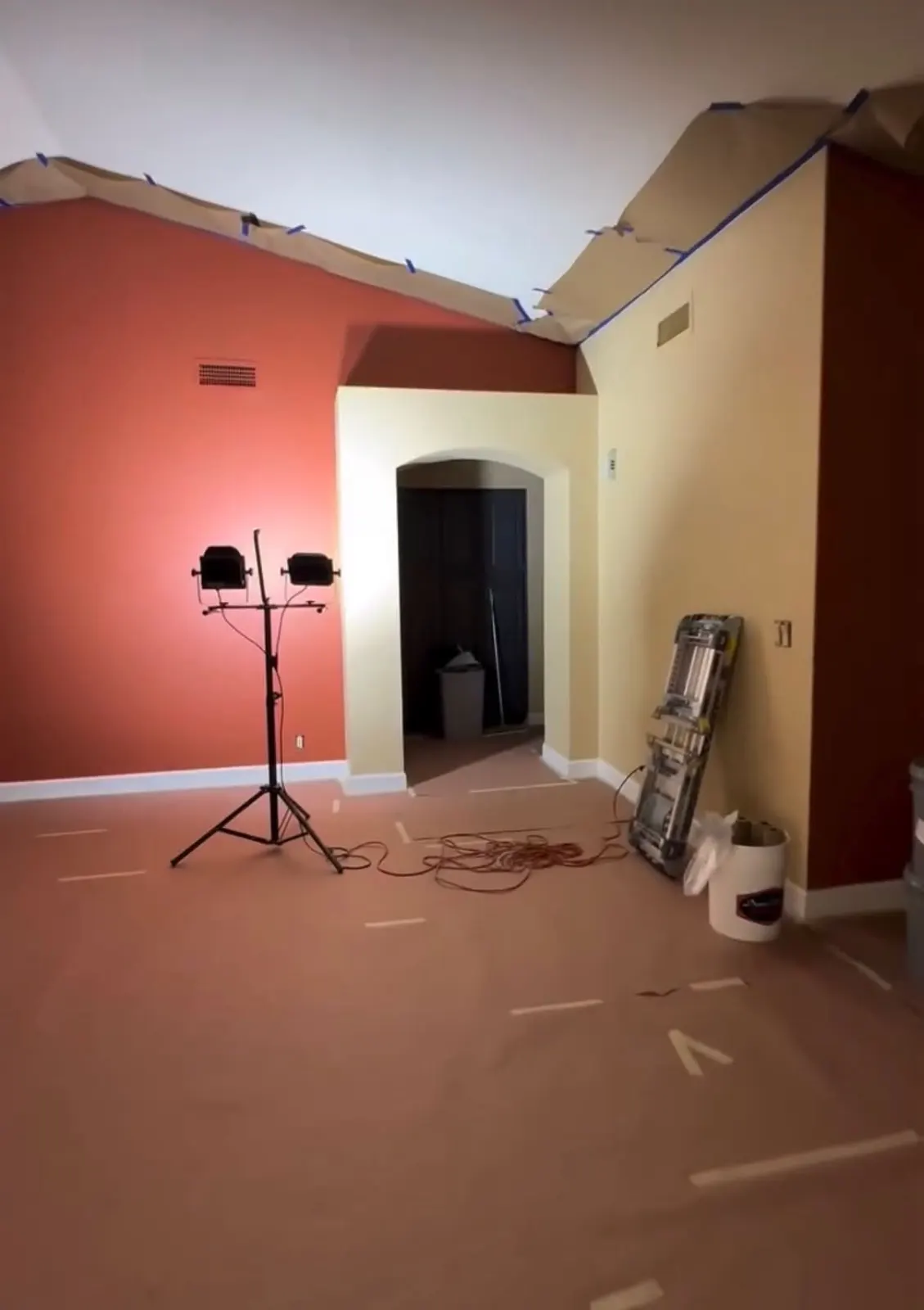
Why dark colors are so hard to hide
Paint hides what is under it by scattering and absorbing light. A pale topcoat over a pale wall only has to cover a small difference in color, so one thin spot does not show. Over navy, charcoal, chocolate brown or a deep red, the same thin spot reads as a gray or pink shadow, because the dark layer underneath absorbs the light that gets through.
Coverage also varies inside one wall. Rollers lay paint evenly in the middle of a wall, but brushwork at corners, edges and outlets goes on thinner. That is why a light color over a dark one so often looks fine from across the room and patchy at the trim.
Primer: white, tinted or gray?
Sherwin-Williams notes that common practice is a white primer or one tinted toward the topcoat color, and that holds for this job. Use white primer when the new color is white or off-white. For a pale color with some depth, such as a light greige or soft blue, ask the store to tint the primer partway toward the topcoat.
Gray-tinted primer is the one to avoid here. Sherwin-Williams' gray primer system, which runs from P1 light gray to P6 dark gray, is meant for deep and vivid topcoats, about 20 percent of its color palette. It helps a dark color reach its true shade in fewer coats, which is the opposite of what you need when going light.
The usual coat count by starting color
- Medium color to light: often two finish coats over spot-primed patches, without full primer, if the old paint is sound.
- Dark neutral, navy or charcoal to light: one full coat of primer, then two finish coats.
- Deep red, orange or bright accent color to white: primer, then two finish coats, and some walls need a second coat of primer or a third finish coat in the corners.
- Glossy dark paint: scuff-sand first, then a bonding primer, then two finish coats.
Where the old color shows through
Patches are the first problem spot. Filler and joint compound are white or gray, so on a dark wall every nail hole and anchor patch stands out. Under a light topcoat they cause a different problem: the patch absorbs paint differently from the painted wall around it and shows as a dull halo. Spot-priming each patch before the full primer coat evens that out.
- Inside corners and along the ceiling, where brush coats are thinner.
- Around outlets, switches and door casings.
- Behind where furniture or a TV hung, if the old paint faded unevenly.
- On the ceiling edge, if the dark color was wrapped a little onto the ceiling. That strip needs ceiling paint, often two coats.
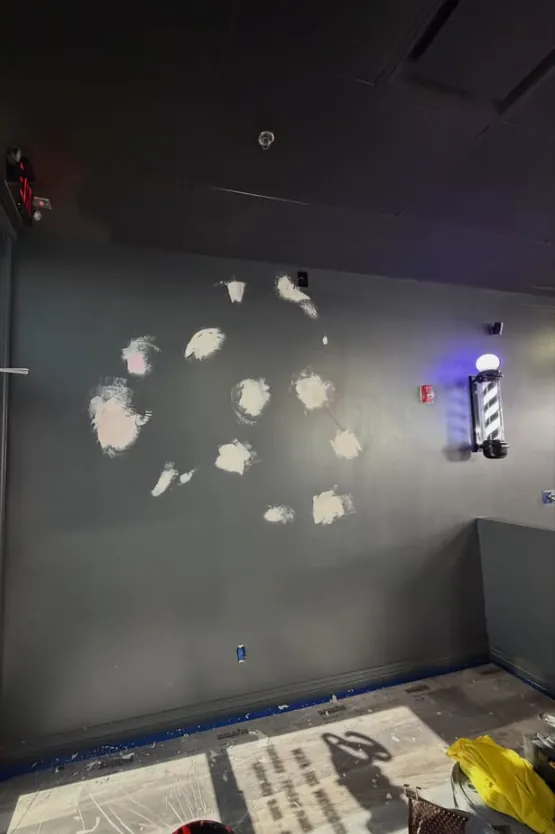
Prep that makes the primer work
- Wash the wall with a mild cleaner, especially near light switches and in kitchens, so the primer bonds to paint, not grease.
- Fill holes and dents, let the filler dry, and sand it flush.
- Test the old sheen. If it is satin or semi-gloss, scuff it with fine sandpaper so the primer can grip.
- Spot-prime every patch, then roll the full primer coat, brushing the corners and edges first.
- Let the primer dry for the time on its label before the first finish coat.
Judging coverage before the last coat
Check the wall after the first finish coat, not just at the end. Look at it from an angle with a work light or in afternoon side light, and look hard at corners and trim lines. A faint pink or gray cast in the corners means the brush work needs another pass there, even if the open wall is covered.
Color can also shift slightly as each coat goes on, because the dark base under it pulls the first coat darker. The second finish coat over primer should match the sample. If it still does not, a third coat is cheaper than living with a two-tone wall.
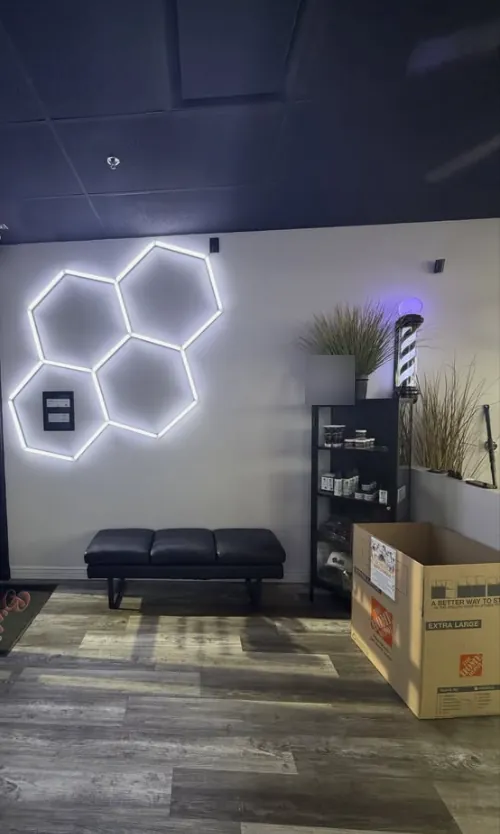
Is it worth the extra coat?
Primer usually goes on faster than finish paint and costs less per gallon than a premium topcoat, so a primer coat is the cheaper way to reach full hide over a dark color. Paint-and-primer-in-one products can cut the count on a medium color, but over a saturated dark wall they still tend to need extra coats.
Whoever paints it, the primer and the number of finish coats belong in the written estimate, so a dark-to-light change is priced as what it is. Our interior finish is Sherwin-Williams Emerald Interior, and the walkthrough at the estimate is the time to show us which walls are going from dark to light.
Frequently asked questions
- Can I paint white over a black wall without primer?
- You can, but plan on three or four coats of finish paint and a good chance of gray shadows at the edges. A white primer and two finish coats is faster and usually looks better.
- Should the primer be tinted when going from dark to light?
- For a white or off-white topcoat, plain white primer works. For a light color with some depth, a primer tinted partway toward the new color can save a coat.
- Why does my new light paint look pink near the corners?
- The old red or brown is showing through where the brushed coat went on thinner. Another brushed pass in the corners, after the wall dries, usually fixes it.
- Is it easier to go from light to dark than dark to light?
- Going darker is usually easier to cover, though deep colors can need a gray-tinted primer and two or more coats to reach an even shade. Going lighter is mostly a hide problem that primer solves.
- Do I need to prime the ceiling if the dark color ran onto it?
- Spot-prime the dark strip, then paint the ceiling edge, or the whole ceiling if the old ceiling paint will not match. Ceiling paint alone often needs two coats over a dark band.