Guide · Interior painting
Painting Over Wallpaper: When It Works and When to Strip It
By the Orange Coatings team · Published
You can paint over wallpaper only when the paper is smooth, non-textured, bonded tight at every seam and edge, and sealed with a solvent-based primer before any water-based paint touches it. If the paper is vinyl, embossed, peeling in more than one spot or hung in a steamy bathroom, strip it, because paint will bubble, crack at the seams or show the pattern through.
Sherwin-Williams says painting over paper is possible but steers people toward removal in most cases. Here is how to tell which side of that line your walls fall on, what each route involves, and what goes wrong when the shortcut is taken on the wrong wall.
The five-minute wallpaper check
Before deciding anything, look closely at the paper in good light and run your hand over it. These questions sort most walls quickly.
- Is it vinyl or vinyl-coated? Paint has little to grip on a slick plastic face. Lean toward removal.
- Does it have raised texture, flocking or an embossed pattern? The texture will read through any paint. Remove it.
- Are seams lifting, corners curling or bubbles showing? Paper already letting go will let go faster under wet paint. Remove it.
- Is it in a full bathroom or laundry room? Steam softens paste over time. Remove it.
- Is it a thin, flat, paper-faced pattern stuck tight everywhere, in a dry room? It is a candidate for painting over, after a test patch.
Why paint over paper so often fails
Wallpaper is held on by a water-soluble paste. Interior latex paint is mostly water. When a wet coat goes on, some of that water soaks through the paper and softens the paste behind it, and the paper swells. As it dries, the paper shrinks back, and wherever the paste let go you get a blister or a seam that lifts and cracks the paint along its edge.
Sherwin-Williams lists the same problems: seams that will not lie down, blistering or peeling from moisture, poor adhesion on heavy vinyl, and a paper texture that looks wrong under a solid color. Even when the paint holds, butt seams tend to show as faint lines once light rakes across the wall, which is common in rooms with big west windows.
Run a test patch before committing
Sherwin-Williams recommends testing the whole system on a small area first. Pick a spot that includes a seam, since that is where trouble starts.
- Clean the test area with a mild detergent and let it dry.
- Lightly sand the seam so it is flush.
- Brush on a quick-drying alkyd (oil-based) or shellac primer over a section a couple of feet wide.
- Let it dry fully, then apply your finish paint over half of it.
- Check the next day. Any lifting, bubbling or seam cracking means the paper has to come off.
If the paper passes: how to paint over it
One trade-off to know: once paper is sealed under oil primer and paint, removing it later is much harder. Steam and remover cannot get through to the paste, so the next owner may end up cutting out drywall.
- Glue down any loose edge with seam adhesive and let it set.
- Wipe the walls clean of dust and handprints.
- Skim the seams with a thin coat of joint compound, feathered wide, so they disappear under paint. Sand smooth.
- Seal every inch of paper with an oil-based or shellac primer. Skip water-based primer here: it reintroduces the moisture you are trying to keep out.
- Apply two finish coats. A lower sheen hides the faint seam lines better than satin or semi-gloss.
Removing it: the method that saves the drywall
Removal is slower up front but gives a wall you never have to think about again. Start by testing a corner: some papers are strippable and the face peels off dry, leaving a backing layer that soaks off easily.
- Turn off power to outlets and switches in the room and cover them; you will be using water.
- Peel off any face layer that comes away dry.
- Score or perforate the remaining paper so remover can reach the paste. Sherwin-Williams notes a wallpaper shaver can do this.
- Soak a section with remover solution and give it 15 to 20 minutes to soften the paste, re-wetting before scraping if needed.
- Scrape at a low angle with a wide flexible knife, working small sections.
- Wash off every trace of paste with warm water and mild detergent, then rinse.
- Let the walls dry, usually about 24 hours.
After removal: paste, torn paper and texture
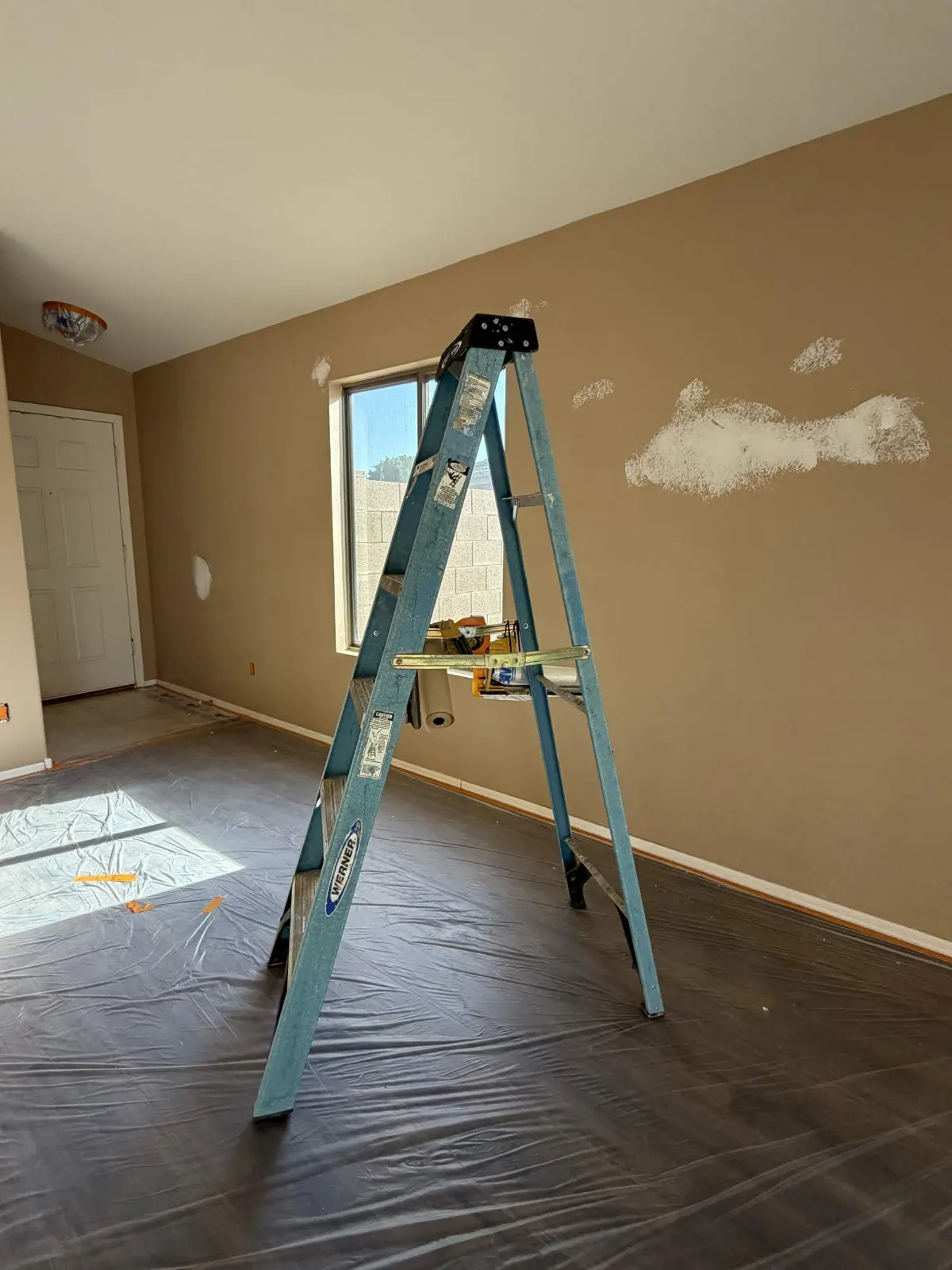
Old paste left on the wall is the hidden problem. Sherwin-Williams warns against painting over wallpaper glue because it causes adhesion problems and an uneven finish. Run a damp hand across the dry wall: if it feels slick or tacky, wash it again.
Paper hung on drywall that was never primed often takes the brown face paper of the drywall with it. Those torn spots must be sealed with an oil-based or shellac primer before any joint compound or latex goes on, or the exposed paper swells and bubbles. Then the wall gets a thin skim coat where needed and a high-adhesion primer over the whole surface.
Most homes in the West Valley have orange peel or knockdown texture on the walls, but the wall behind wallpaper is often smooth or patchy. After removal the bare wall may need texture sprayed to match the rest of the room, or the room will look odd once it is one color.
Borders, accent walls and powder rooms
Wallpaper borders at the ceiling line or chair rail are the most common holdover in older Valley homes. A border painted over leaves a visible ridge along both edges, so it almost always comes off. Accent walls in paper are a judgment call based on the five-minute check.
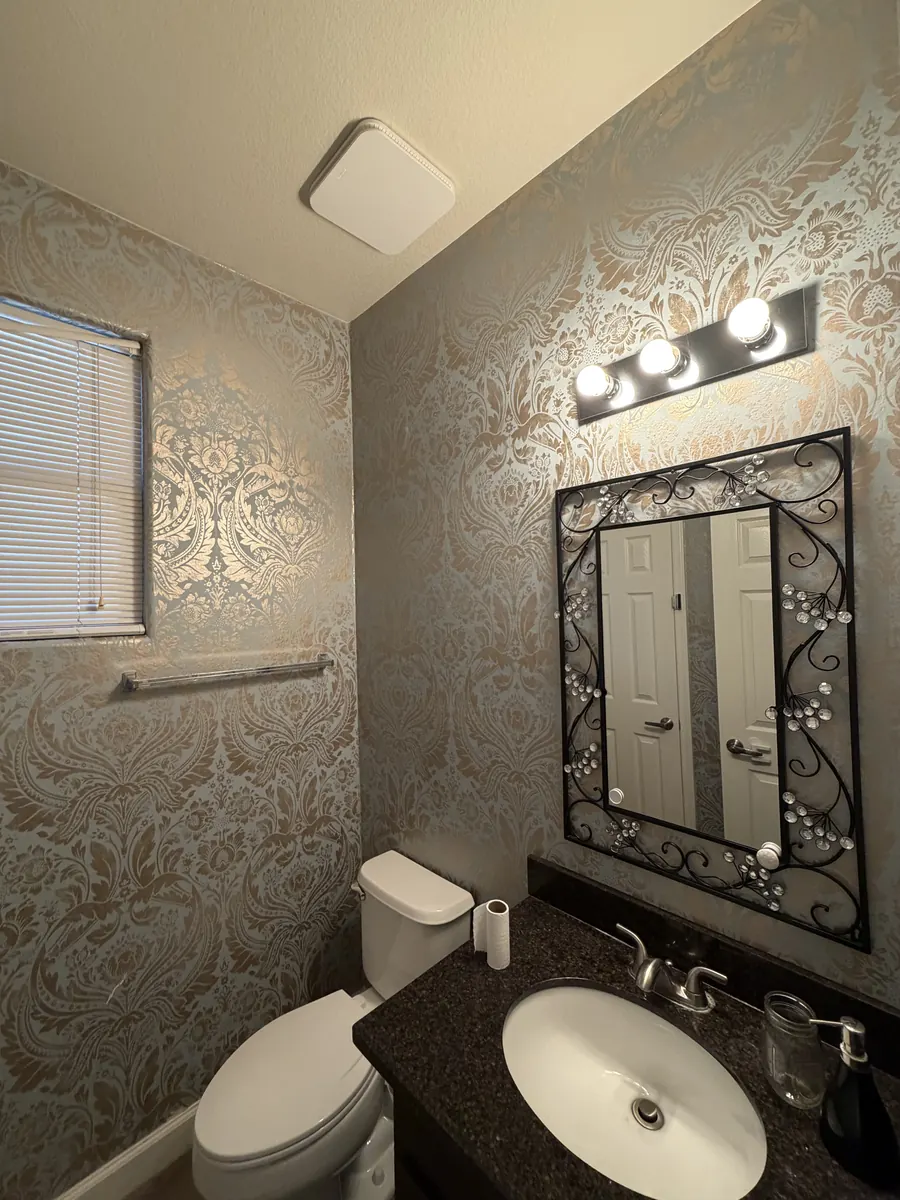
Powder rooms deserve a closer look. They are small but full of obstacles: a mirror, a vanity backsplash, a toilet tank and towel hardware. Paper behind those pieces is hard to reach, so plan on pulling hardware and possibly the mirror. Our Goodyear powder room project shows this exact situation, with damask paper around a wrought iron mirror and granite vanity.
How we scope a wallpapered room
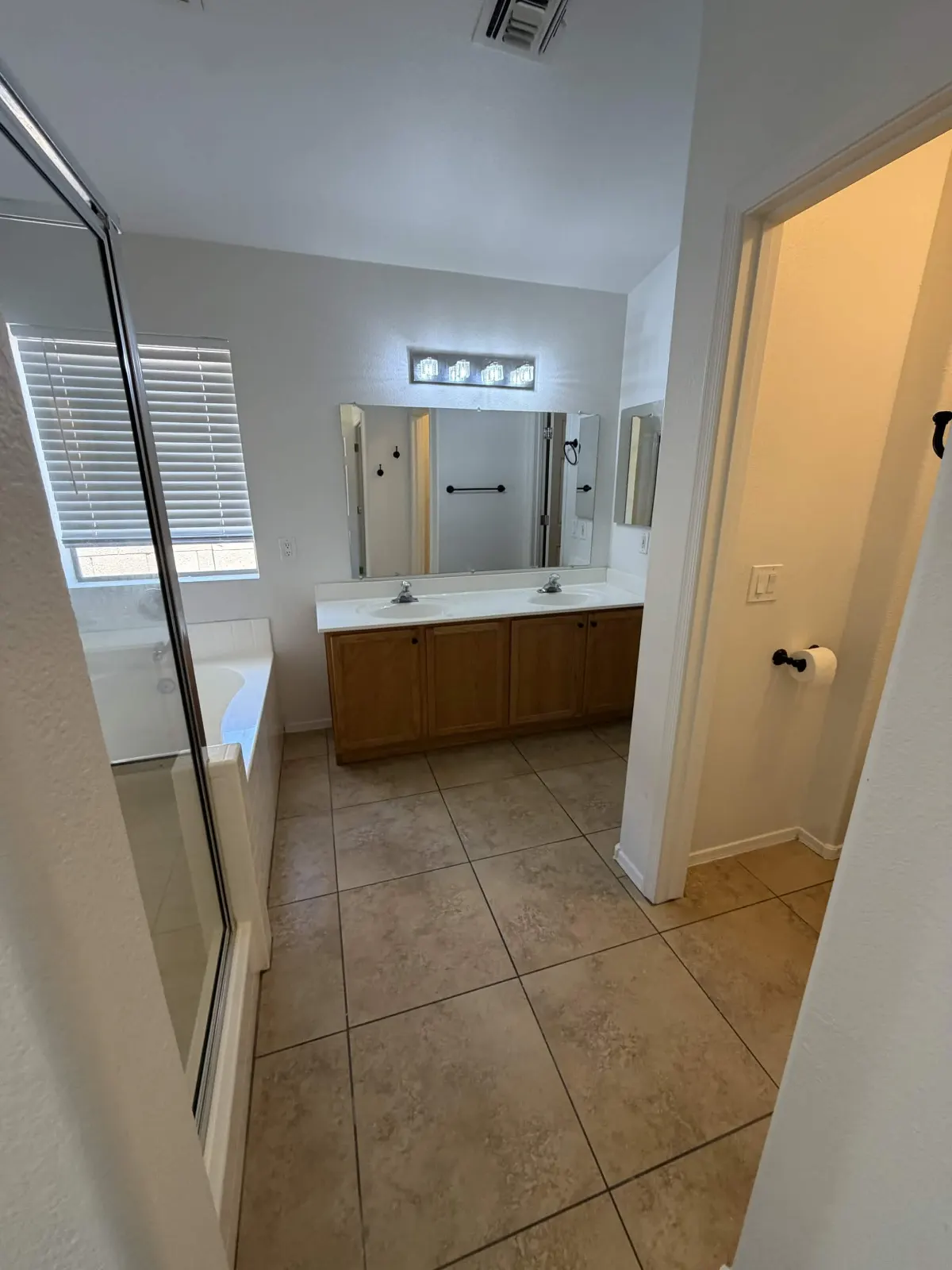
Point out any wallpaper during the same-day estimate, including borders and paper hidden behind furniture. We check the type of paper, how well it is bonded and what the wall looks like at a loose corner, then write the removal, repair, texture and priming into the quote so the prep is not a surprise halfway through. The finish coats are Sherwin-Williams Emerald Interior, a low-VOC paint, applied once the wall is clean, sealed and dry.
Frequently asked questions
- Will primer alone stop wallpaper seams from showing through paint?
- No. Primer seals the paper, but a raised seam still casts a shadow. Seams need to be glued, skimmed with joint compound and sanded flush before priming if you want them to disappear.
- Is a water-based primer okay over wallpaper?
- It is risky. Water in the primer can soften the paste and make the paper bubble. An oil-based or shellac primer seals the paper without wetting it.
- How long does wallpaper removal add to a paint job?
- It depends on the paper and the wall underneath. A small powder room might add a day or two once washing, drying, patching and priming are counted, while several rooms of stubborn paper take longer.
- Can I paint over a wallpaper border instead of removing it?
- It usually looks bad. The border's edges leave a raised line along the wall even after paint, so removing it and patching the strip gives a cleaner result.
- Why is my wall bubbling after I removed the wallpaper and primed?
- The drywall's face paper was probably torn during removal and then hit with water-based primer or compound. Cut away the loose bubbles, seal the area with an oil-based or shellac primer, then patch and prime again.
- Does painted-over wallpaper hurt resale?
- Buyers rarely notice if it was done well, but inspectors and future painters often do once seams start to show. Removing it now avoids a harder removal for whoever owns the house next.
Related
- Residential interior painting
- Drywall repair and texture
- Kitchen and bathroom painting
- Accent wall painting
- Powder room and baseboards in Goodyear
- Interior painting in Goodyear, AZ
- Interior painting in Glendale, AZ
- Getting your house ready for interior painters
- Picking interior sheens
- Painting a Light Color Over a Dark Wall: Primer and Coats
- When You Need Primer Before Painting (and When You Don't)