Guide · HOA community repaints
Planning an HOA Common-Area Repaint
By the Orange Coatings team · Published
A smooth HOA common-area repaint starts with a condition walk and one written scope that every contractor bids on, then moves through color approval, budget, scheduling and resident notice in that order. Boards that skip the shared scope end up comparing bids that cover different work.
Below is the planning sequence we suggest for perimeter walls, entry monuments, gates, ramadas, mailbox kiosks and amenity buildings, with the Arizona-specific details that affect timing and prep.
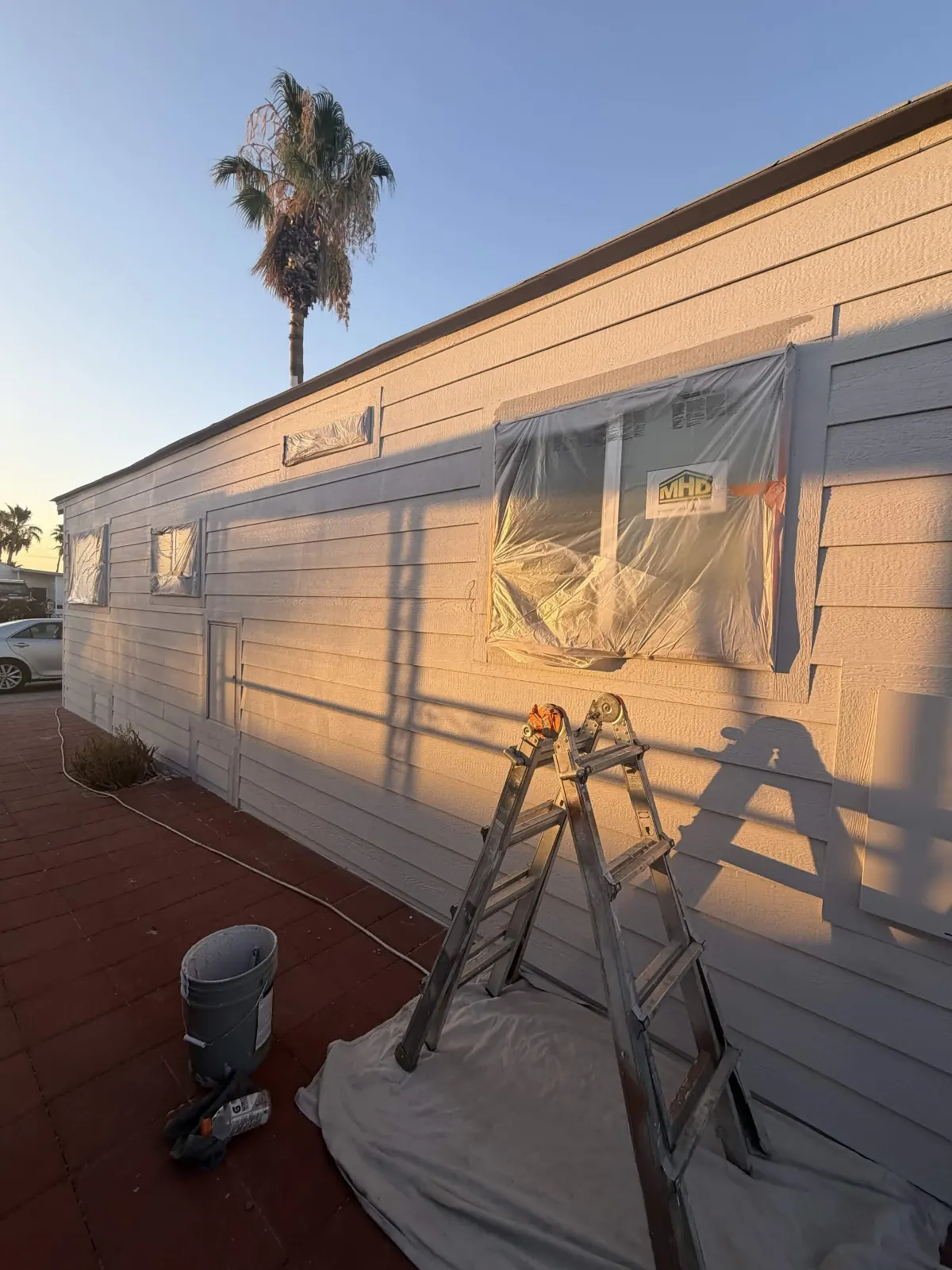
1. Walk the community and write down what you see
Walk every common surface with a notepad or a phone and take dated photos. Note the material, the condition and roughly how much of it there is. This becomes the base for the scope and a record for the reserve file.
- Block perimeter and retaining walls: fading, white salt deposits, cracked caps, sprinkler staining
- Stucco on monuments, clubhouses and pool buildings: hairline cracks, peeling, chalking
- Wrought iron fencing, pool gates and railings: rust at welds and at the base of pickets
- Wood or steel ramadas and pergolas: checked wood, flaking paint, bird damage
- Mailbox kiosks, light poles, signage and trash enclosures
- Doors, trim and fascia on amenity buildings
2. Write one scope that every bidder prices
A shared scope is the single best tool a board has. Without it, one bid includes crack repair and primer and another does not, and the low number is low for a reason.
- Surfaces and approximate quantities, by area of the community
- Prep: washing, crack repair, rust treatment, removal of loose paint, efflorescence cleanup
- Primer where needed, such as a masonry primer on bare or patched stucco and block
- Finish product line, sheen and number of coats
- Colors by surface, with the color codes
- Protection of landscaping, lights, vehicles and irrigation
- Work hours, phasing and cleanup expectations
3. Settle colors with your governing documents
Common-area colors usually tie into the community's design guidelines, and homeowners' walls often have to match the perimeter. Check your CC&Rs, design guidelines and any architectural committee policy before changing a color, and follow the approval and notice steps they require.
If you are keeping the existing colors, confirm them with the original color codes or a match from a sample, not from memory. Sun-faded walls are lighter than the original, and matching the faded surface bakes the wrong color into the next twenty years. Paint large samples on a sunny and a shaded wall before the board votes.
4. Line up the budget and the reserve study
Most associations fund repainting from reserves, and the reserve study usually lists painting cycles by component. Compare the study's assumptions to what the condition walk found. Walls on the west and south sides often need attention sooner than the study expects, while shaded areas can wait.
If the full job does not fit one year, phase it. Perimeter walls along the main entry and the most visible streets go first, back walls and less visible areas follow in the next budget year. A phased plan also keeps the community from looking like a construction zone all at once.
5. Schedule around Arizona weather
October through April gives the best conditions for exterior coatings in the Valley. Summer work is possible with early starts, but the hottest weeks shorten working time, and monsoon season, June 15 through September 30, brings afternoon storms and dust that can interrupt a wall run. Sherwin-Williams notes that temperatures over 100°F can make paint dry before it bonds, which is why crews in summer finish sun-facing walls by late morning.
Leave a cushion in the calendar for weather and for one round of resident questions before the start date.
6. Tell residents early and clearly
- Send notice a few weeks ahead, again a few days before work reaches each street
- Name the dates, work hours and which walls, gates or amenities are affected
- Ask residents to move vehicles parked against perimeter walls on their street's dates
- Ask landscapers to pause irrigation along freshly washed and painted walls
- Explain how pool or clubhouse access will work if those areas close for a day
- Give one contact for questions and post updates where residents already look
7. Compare bids on more than price
Verify each contractor's Arizona ROC license and that it is active, and request a certificate of insurance before the contract is signed. Ask who supervises on site, how they handle a resident complaint, and how they protect plants, gravel and vehicles. Check that every bid lists the same prep, products and coats as your scope.
Orange Coatings holds ROC license 365464, is bonded and insured, and gives written estimates after an in-person walk. We can provide product and color details for committee review.
8. Close the project out properly
Walk each phase with the contractor before signing it off, and make a punch list with photos. Keep a closeout file with the product names, color codes, sheens and dates by surface. The next board will thank you, because touch-ups after a car hits a wall or a new homeowner's fence repair will match on the first try.
Frequently asked questions
- How far ahead should an HOA plan a common-area repaint?
- Start several months before the target season, longer if colors are changing. Condition walks, scope writing, bidding, board votes and resident notice each take time, and fall slots fill early.
- Should the HOA paint homeowners' side of the perimeter wall?
- That depends on who owns and maintains each face of the wall under your governing documents. Confirm it before writing the scope, since it changes quantities and resident notices.
- What is the white powder on our block walls?
- It is usually efflorescence, salt carried to the surface by water, often from sprinklers. It has to be cleaned off and the water source addressed before painting, or it pushes the new paint off.
- Can common areas be painted in phases over two years?
- Yes, and many associations do it to fit reserve funding. Start with the most visible walls and entry features, and keep the same colors and products so the phases match.
- Do we need to repaint the wrought iron at the same time as the walls?
- Not always, but rust at the base of fence pickets stains freshly painted block. Doing both in one project keeps the crew from working around new paint twice.