Guide · Rental turnover painting
Rental Turnover Painting Checklist for Landlords
By the Orange Coatings team · Published
A fast rental turnover paint job comes down to five things: a move-out walkthrough with photos, a room-by-room call on touch-up versus full repaint, proper patching and stain priming, one standard set of colors and sheens, and a record of what was used. Get those right and every future turnover is quicker and cheaper.
If the home was built before 1978, add one more item: federal lead-safe rules apply to paid work that disturbs old paint. Here is the full checklist.
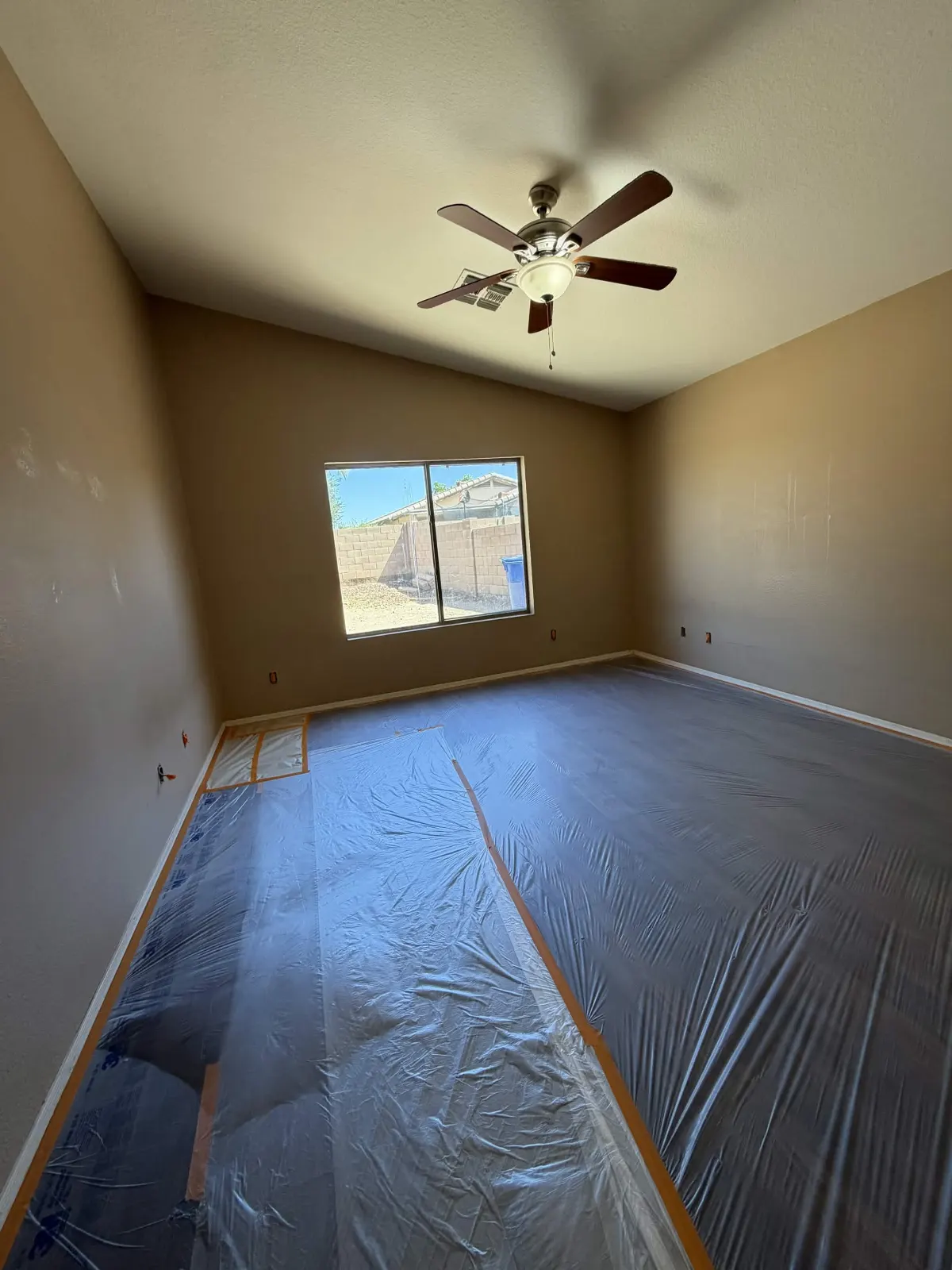
Move-out walkthrough
Do it the day the keys come back, before the cleaners arrive, and photograph each wall with the date. The photos support any deposit deductions and become the work list.
- Nail and anchor holes from pictures, TVs and shelves
- Scuffs along hallways, behind doors and beside beds
- Grease on kitchen walls and around switch plates
- Water stains on ceilings, under windows and near bathroom fans
- Smoke or pet odor that has soaked into walls
- Dents and gouges from moving furniture, damaged corners
- Chipped trim, baseboards and door edges
- Marker, crayon or tape residue in kids' rooms
Touch up or repaint the whole room?
Touch-ups only blend when the paint is the same color, the same sheen and the same product, and the wall has not faded or yellowed much. Flat and matte finishes blend touch-ups best. Eggshell and satin often show a shiny halo around a spot repair, called flashing, especially in raking light from a window.
A practical rule: if a wall needs more than a handful of small spot repairs, repaint it corner to corner. If three or more walls in a room need it, repaint the room. Ceilings are usually touched up unless there is a stain or smoke film.
Standardize your colors and sheens
The single biggest time saver for a landlord is using the same paint in every unit. Pick one neutral wall color, one trim color and one ceiling white, and keep the sheen the same everywhere. Light greiges and warm beiges show fewer scuffs than bright white and suit most tenants' furniture.
Write the product, color code and sheen for each surface in the unit file, and tape the same note inside a utility closet. Next turnover, anyone can match it.
- Walls: a light neutral in eggshell or satin for washability
- Ceilings: flat white to hide surface flaws
- Trim and doors: semi-gloss or satin so scuffs wipe off
Prep checklist before any paint goes on
- Wash kitchen walls, bathroom walls and areas around switches with a degreasing cleaner, then rinse.
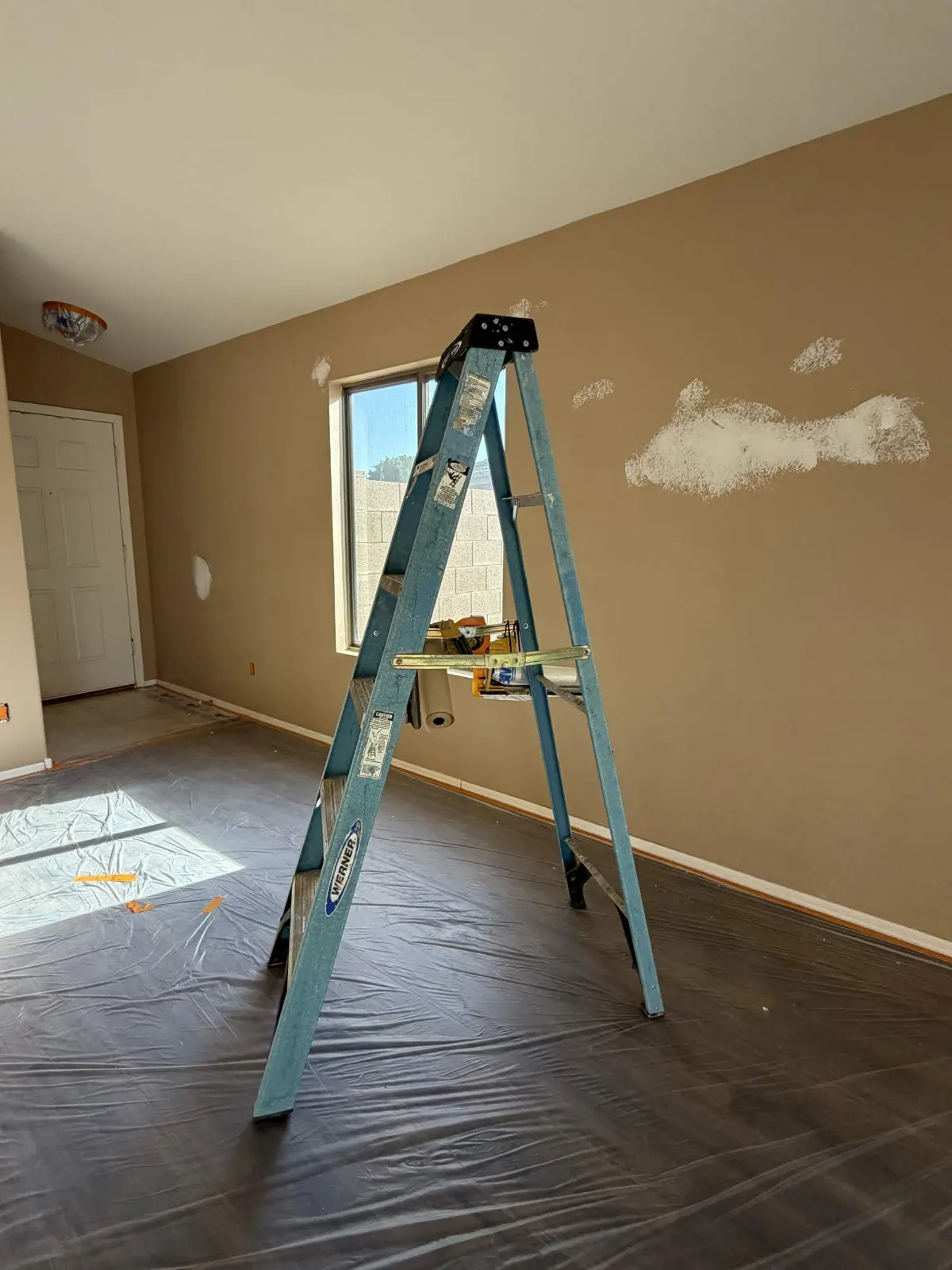
- Fill nail holes and small dents with spackle; use mesh patches or a drywall repair for anything larger than a coin.
- Sand patches flush and wipe off the dust.
- Spot-prime patches so they do not show through as dull spots.
- Seal water stains, smoke film and marker with a stain-blocking primer.
- Caulk open gaps where baseboards and casings meet the wall.
- Remove switch plates and outlet covers instead of painting around them.
Smoke, pet and water stains
Regular wall paint does not hold back nicotine, water stains or pet odor; they bleed through within days. Clean the surface, then seal it with a stain-blocking primer before the finish coats. For heavy smoke, prime every wall and ceiling, not just the yellow spots.
For water stains, find and fix the leak first. A primed stain over a wet ceiling comes back, and the tenant's first maintenance call will be about it.
Lead paint rules for pre-1978 rentals
The EPA's Renovation, Repair and Painting (RRP) Rule covers paid work that disturbs paint in housing built before 1978. EPA says a landlord or property management company must comply with the rule when it does paint-disturbing work in a pre-1978 rental, and that owners hiring out such work should use a Lead-Safe Certified firm.
Most West Valley homes were built after 1978, but older neighborhoods in Glendale, Peoria and early sections of Sun City, which dates to 1960, include pre-1978 houses. Check the build year on the county assessor record before sanding or scraping, and ask any contractor about lead-safe certification for those homes.
Sequence the turnover so nothing gets redone
Interior painting can run year-round in Arizona, but keep the air conditioning on during summer turnovers. A closed-up unit in July gets hot enough to rush drying and leave lap marks.
- Repairs first: plumbing, electrical, drywall, doors and hardware.
- Paint: ceilings, then walls, then trim and doors.
- Flooring repairs or carpet cleaning after painting, so drips do not land on new floors.
- Final clean, including windows and blinds.
- Walkthrough with photos for the move-in file.
Choose paint that survives the next tenant
Washable paint saves money over several leases because scuffs wipe off instead of needing paint. We use Sherwin-Williams Emerald Interior, a washable low-VOC finish, which also means a unit can be shown soon after painting without a strong paint smell. Our rental turnover work includes masking, patching and cleanup, with a written estimate after a same-day visit.
Frequently asked questions
- How often should a landlord repaint a rental?
- Many landlords repaint at turnover when walls show wear, and touch up when they do not. With a washable finish and a standard color, some units can go two or more tenancies with touch-ups only.
- What is the best paint color for a rental property?
- A light, warm neutral such as a greige or soft beige works for most units. It hides scuffs better than bright white and fits nearly any tenant's furniture.
- Can I charge a tenant for repainting?
- That depends on your lease, the condition at move-in and Arizona landlord-tenant law, since normal wear is treated differently from damage. Check with a property manager or attorney for your case.
- Should rental walls be flat or eggshell?
- Eggshell or satin is easier to wash, which helps between tenants. Flat hides wall flaws and touches up best, so some landlords use flat on ceilings and in low-traffic bedrooms only.
- How long does a rental turnover paint job take?
- A small apartment with light patching can often be painted in a day or two. Heavy patching, smoke sealing or a full house takes longer, and drying time between primer and paint adds to it.
- Do I need a certified painter for a rental built before 1978?
- If the work will disturb old paint, the EPA's RRP Rule generally requires a Lead-Safe Certified firm for paid work, and it applies to landlords doing the work themselves. Confirm the build year first.