Guide · Exterior painting
Why Exterior Paint Bubbles and Blisters in Arizona
By the Orange Coatings team · Published
Exterior paint blisters in Arizona for two main reasons: heat, when paint goes onto a wall that is too hot or in direct sun, and moisture, when water inside the stucco or wood pushes the paint film off from behind. Both make the paint lose its grip and lift into bubbles.
Which one you have decides the fix. Heat blisters are an application problem and usually only need scraping, sanding and repainting the right way. Moisture blisters will keep coming back until the water source is found and stopped. A simple cut test, and where the blisters are on the house, usually tells you which.
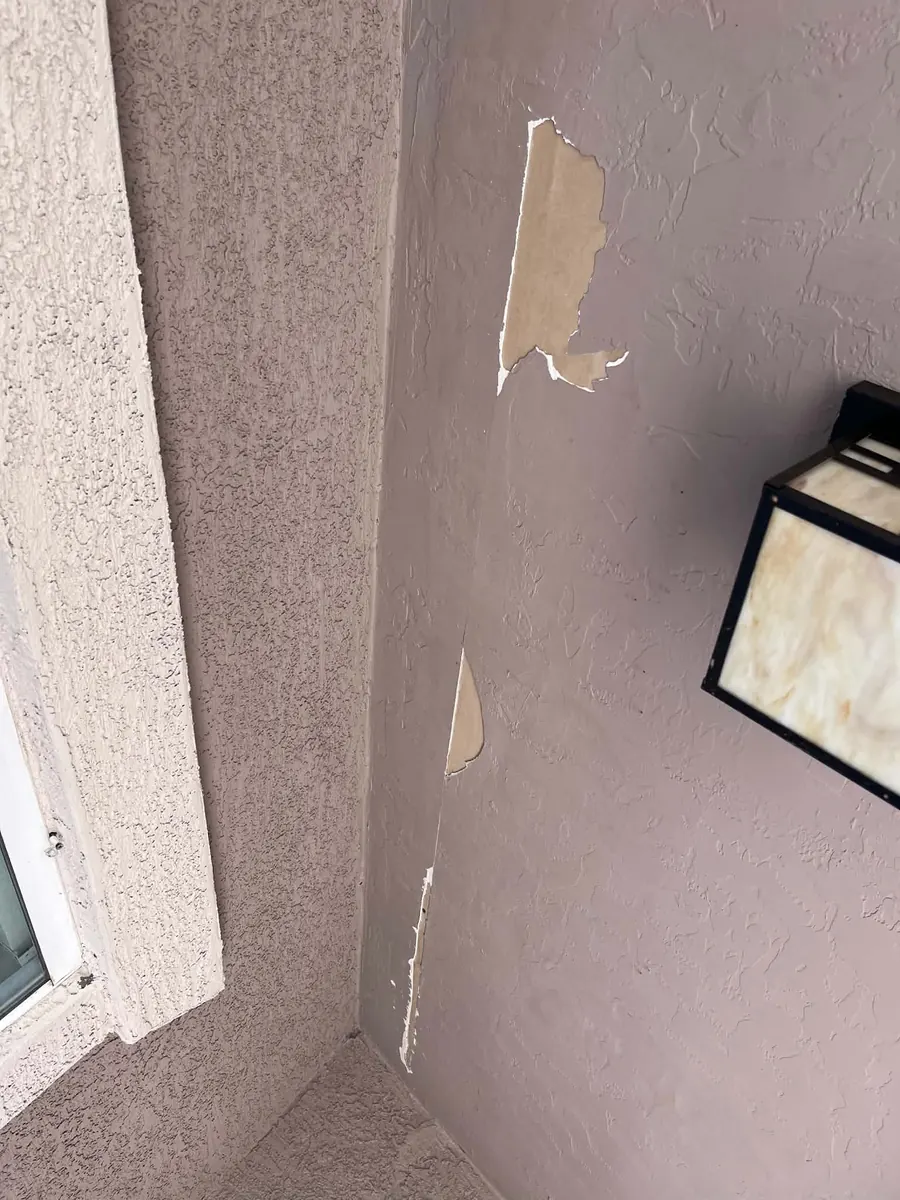
The cut test: what is under the blister?
Sherwin-Williams describes blistering as bubbles caused by a loss of adhesion and lifting of the paint film from the surface below, and it sorts the fix by how deep the blister goes. You can check that yourself with a utility knife.
- Pick a blister on a wall you can reach safely and slice it open.
- Look at the bottom. Bare stucco, block or wood means the blister reaches the substrate.
- Old paint underneath means only the newest coat let go of the coat below it.
- Note whether the inside is damp, powdery or clean and dry.
- Check a few blisters in different spots, since a house can have both kinds.
Blisters down to bare stucco: moisture
When blisters reach the substrate, Sherwin-Williams says the likely cause is moisture escaping from the surface. In a West Valley house that moisture usually has a source you can find:
- Sprinkler heads or drip lines that wet the base of the wall every day
- Roof or parapet leaks on flat-roof sections, wetting the stucco from above
- Cracks around windows and doors that let monsoon rain into the wall
- AC condensate lines draining against the house
- Steam from bathrooms, laundry rooms and kitchens moving out through an exterior wall
- Stucco painted while still damp from washing, rain or a fresh patch
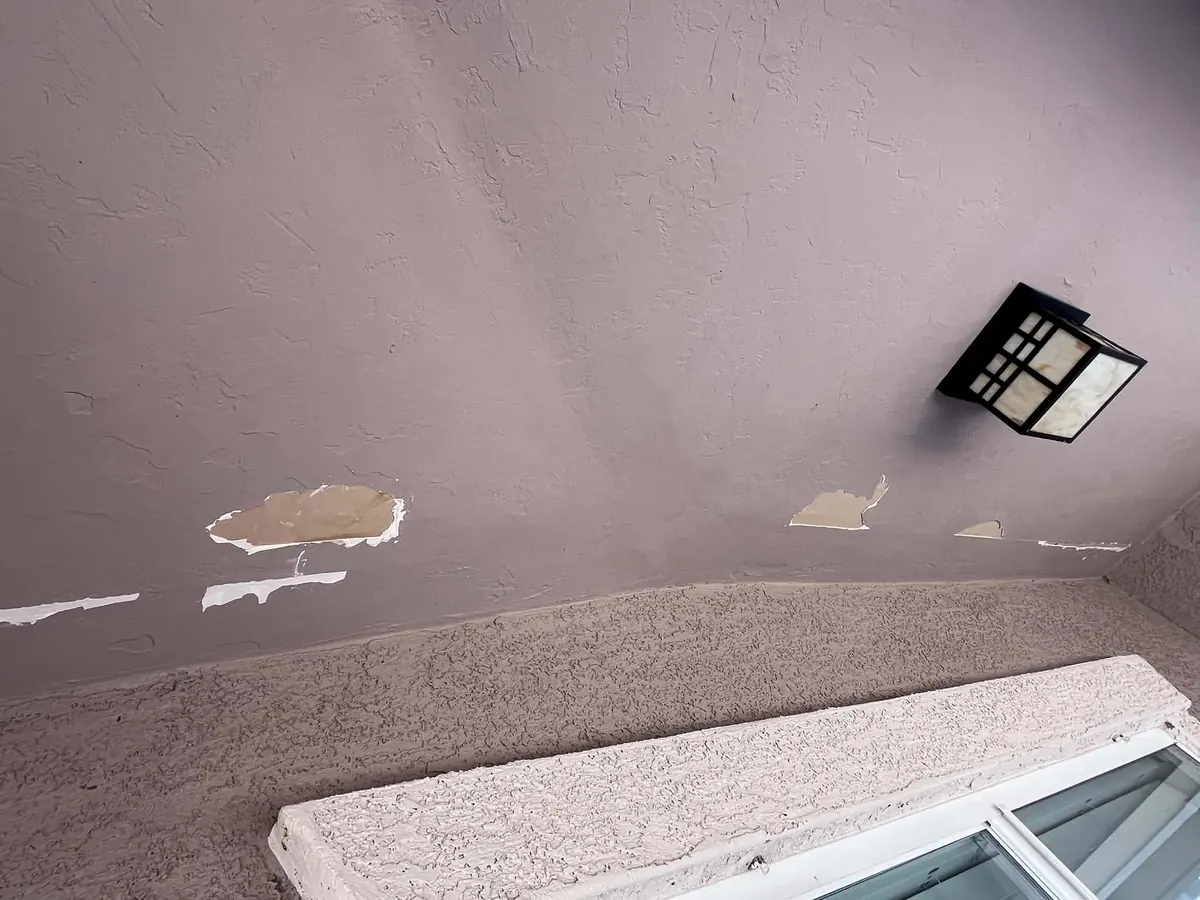
Blisters in the top coat only: heat and timing
Blisters that sit on top of older paint point to the last application. Sherwin-Williams lists heat blistering from painting in direct sunlight on a surface that is too warm, latex paint exposed to dew, humidity or rain shortly after it dried, and paint applied over a surface contaminant the new coat could not stick to.
Arizona makes the first one easy to do. A west-facing stucco wall in the afternoon can be far hotter than the air, and Sherwin-Williams notes that temperatures over 100 degrees can make paint dry before it has had a chance to bond. Dark colors absorb more heat and blister more readily than light ones on the same wall.
Where the blisters are tells a story
- Along the bottom of a wall, in a band: sprinkler or irrigation water
- Below a window corner or roof edge: water getting in from above
- On parapets and the walls under them: flat-roof or parapet cap leaks
- Outside a bathroom or laundry room: moisture from inside the house
- Across the whole sunny side, but not the shaded side: paint applied in direct sun or onto a hot wall
- On fascia and trim boards: wet wood, or oil-based paint applied over damp wood
Should you pop the blisters?
Popping a blister and painting over it does not fix anything. The paint around it has already lost adhesion, and new paint over loose paint just adds weight to a coating that is letting go. If it is a moisture blister, the water is still coming, and the new paint will blister in the same place.
Leave intact blisters alone until you are ready to repair the area properly. If a blister has broken and the wall underneath is exposed, a temporary patch is fine, but plan the real repair before monsoon season.
How to repair blistered exterior paint
- Find and stop the moisture source: redirect sprinklers, fix the roof or parapet, seal the crack, move the condensate line.
- Scrape off all loose and blistered paint until the edges are firmly bonded.
- Sand the edges smooth so the repair does not show as a ridge.
- Let the wall dry completely; Sherwin-Williams advises waiting at least a day after heavy rain and making sure the surface is dry.
- Repair stucco cracks and patches, then prime bare or patched stucco with a masonry primer.
- Repaint in shade or early in the day, with the temperature inside the label range, and keep water off the new paint while it dries.
How we prevent blisters on a repaint
Most blistering is prevented before the first coat goes on. On our exterior jobs the walls are washed and given time to dry, cracks and gaps are caulked, bare or patched stucco gets Sherwin-Williams Loxon masonry primer, and two coats of Emerald Exterior are sprayed and back-rolled. In summer we schedule early-morning starts to stay ahead of the afternoon heat, so paint does not go onto a baking surface.
At the estimate we look for the signs of moisture problems, such as blisters at the base of walls or below parapets, and point them out so the cause can be fixed before we paint over it.
Frequently asked questions
- Why is my new exterior paint bubbling?
- On a fresh paint job, blisters usually mean the paint went onto a hot wall in direct sun, onto damp stucco, or got hit by dew or rain before it had dried. Cut one open: if older paint is underneath, it was the application; if bare stucco shows, look for moisture.
- Do blisters mean my stucco has water damage?
- Not always. Blisters down to bare stucco do mean moisture is moving through the wall, but the source is often simple, such as a sprinkler hitting the wall. Fix the source and let the wall dry before repainting.
- Can I paint over blistered paint?
- No. Scrape off the loose paint, sand the edges, fix any moisture source and prime bare areas first. Paint over blisters peels with them.
- Does elastomeric paint blister more?
- It can when moisture is getting into the stucco, because a thick, flexible film breathes less than a standard acrylic. Moisture sources need to be fixed before an elastomeric coating goes on.
- Why are blisters only on the sunny side of my house?
- That pattern points to heat during application: the paint went onto walls that were too hot. Dark colors make it worse because they absorb more of the sun's heat.
- Is blistering the same as peeling?
- They are related. Blisters are paint that has lost adhesion but is still in one piece; once they break, the loose edges peel and flake.