Guide · Epoxy flooring
Flake vs Metallic Epoxy: Which Fits Your Garage?
By the Orange Coatings team · Published
For a garage you park in and work in, flake epoxy is usually the better fit: the colored chips hide dust, tire marks and concrete flaws, add a little texture underfoot, and are easier to repair. Metallic epoxy fits a show garage, home gym or interior space where you want a glossy, marbled, one-of-a-kind look and are willing to keep it clean.
Both start the same way, with properly prepared concrete and a well-bonded base coat. The difference is what goes on top and how it lives day to day.
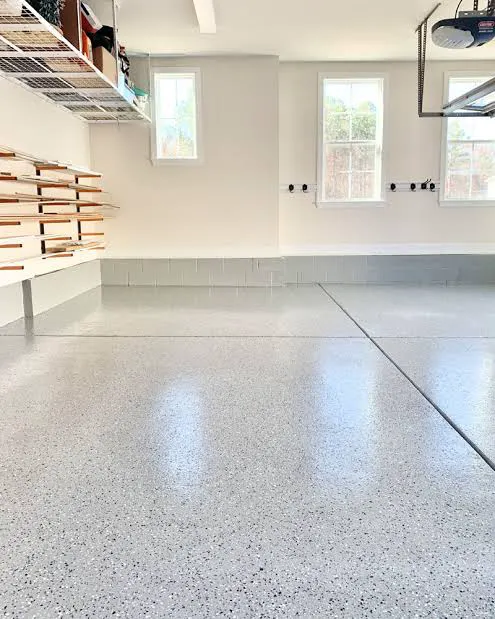
How a flake floor is built
A flake floor starts with a pigmented base coat. While it is still wet, colored vinyl chips are broadcast across it, either lightly for a speckled look or to full coverage so no base color shows. After it cures, loose flakes are scraped and vacuumed off and a clear topcoat locks the rest in and takes the wear.
The flakes come in many blends, from gray and black mixes to tans and browns that go with desert landscaping and stucco. The result has a slight texture, like a terrazzo or granite countertop seen from standing height.
How a metallic floor is built
A metallic floor uses epoxy mixed with fine metallic or pearlescent pigments, poured over a base coat and then worked with rollers, brushes, sprayed solvent or air to move the pigment around. As it levels and cures, the pigment settles into swirls, ripples and depth that look like polished stone, lava or liquid metal. A clear topcoat usually goes over it.
Every metallic floor is different, because the pattern depends on how the installer works the material in the moment. That is the appeal, and also why it takes an experienced hand.
Side-by-side for a garage
- Hiding dirt: flake hides dust, sand and tire marks very well; metallic shows them, especially in dark colors.
- Traction: flake has natural texture; metallic is smooth and glossy and can be slippery when wet.
- Concrete flaws: flake camouflages minor dips and patched cracks; metallic's mirror finish can highlight them.
- Repairs: a damaged flake area can be patched and blended; a metallic pattern is very hard to match.
- Look: flake reads as clean and practical; metallic reads as a showpiece.
- Installation: flake is more forgiving; metallic depends heavily on installer skill.
Arizona dust, monsoons and traction
Desert garages get a constant film of fine dust, and monsoon season adds dust storms and wet tires rolling in from the driveway. A flake floor shrugs off both visually; you sweep when you feel like it, not because every footprint shows.
On a smooth metallic floor, that same dust shows up immediately, and water from a car or a rinsed-off cooler makes the surface slick. An anti-slip additive can be mixed into the topcoat of either floor, and on our systems it is an option for entries and wet areas. On metallic it slightly dulls the glossy depth, which is a trade-off worth knowing before you choose.
Sunlight and how each floor ages
Afternoon sun through an open garage door can make clear epoxy amber over time. On a busy flake blend, slight ambering is hard to notice. On a light or white metallic floor, a warm-tinted band near the door is easier to see. If your garage door faces west and stays open, ask about a UV-stable topcoat whichever style you pick.
Where metallic really shines
In these spaces the floor gets less grit, fewer hot tires and more attention, which is where a metallic finish pays off.
- A collector's garage that is more showroom than workshop
- A home gym, game room or converted garage living space
- Interior floors in a custom home, where it can replace tile
- Retail, salon or office floors where the look is part of the brand
Color choices for each style
With flake, color comes from the blend. Gray, black and white mixes suit gray or white stucco homes and hide tire marks well. Tan, brown and cream blends go with warm desert exteriors and hide the reddish dust common in the Valley. A blend with some mid-tones hides dirt better than a very light or very dark one.
Metallic floors come in silvers, charcoals, coppers, bronzes and blues, and the base coat under the metallic layer changes the final look. Lighter metallics show dust less than near-black ones. Since each pour is unique, choose from large sample boards or finished floors rather than a small chip, and expect some variation from the sample.
Making the choice
- Be honest about how the garage is used: daily parking, tools and yard gear favor flake.
- Think about cleaning: if you will not sweep often, metallic will look dusty most of the time.
- Check the slab: a heavily patched or uneven floor hides better under flake.
- Look at real samples of both in daylight, not just photos.
- Ask about anti-slip options and a UV-stable topcoat for either choice.
Frequently asked questions
- Is flake or metallic epoxy more durable?
- Durability comes mostly from prep, the base coat and the clear topcoat, which both styles share. In daily use, flake floors tend to look better for longer because they hide wear and are easier to repair.
- Is metallic epoxy slippery?
- It is smooth and glossy, so it can be slippery when wet or dusty. An anti-slip additive in the topcoat improves grip, with a small trade-off in shine.
- Can I see the pattern before a metallic floor is poured?
- You can see sample boards and photos of the colors and techniques, but the exact pattern forms during installation. No two metallic floors come out identical.
- Do flake floors need a topcoat?
- Yes. The clear topcoat locks the flakes in place, smooths the surface to a cleanable texture and takes the wear from tires and foot traffic.
- Which hides oil and tire marks better?
- Flake, by a wide margin. The varied chip colors break up marks, while a smooth metallic surface makes them stand out until cleaned.
- Can I mix flake and metallic in one space?
- It is possible, for example a metallic border around a flake field, but it adds cost and complexity. In most garages, one style used throughout looks cleaner and is easier to maintain.