Epoxy flooring · Flake garage floors
Flake Epoxy Garage Floors in Surprise and the West Valley
Published
A flake epoxy garage floor is a Sherwin-Williams epoxy base coat with colored vinyl flakes broadcast into it while it is still wet, then locked in under a clear topcoat. The flakes hide dust, tire marks and small flaws in the concrete, and the finished surface wipes clean with a damp mop.
What decides whether that floor lasts is the work nobody sees. Every flake floor we install starts with cleaning, degreasing, crack repair and surface profiling, so the epoxy bonds into the slab instead of sitting on top of it and peeling the first hot summer.
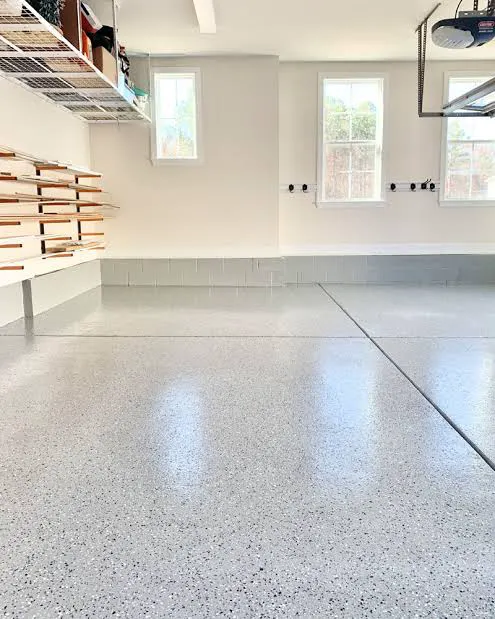
| System | Sherwin-Williams epoxy base, broadcast flakes, clear topcoat |
|---|---|
| Prep | Degrease, repair cracks and profile the concrete |
| Options | Flake blend, broadcast density, anti-slip additive |
| Estimate | Same-day and in person, call (602) 932-3417 |
What a flake epoxy floor includes
A flake floor is a layered system, not a single coat of paint. Each layer has a job, and skipping one is where most garage floors go wrong.
- Concrete prep: cleaning, oil-stain treatment, crack and divot repair, and profiling so the surface is open and slightly rough
- Epoxy base coat in a color chosen to sit under your flake blend
- Vinyl flakes broadcast by hand into the wet base
- Scraping and vacuuming loose flakes once the base has hardened
- Clear topcoat that seals the flakes and takes the daily wear
- Optional anti-slip additive in the topcoat for entries, steps and wet areas
Who a flake floor suits
Most of our flake floors go into two- and three-car garages that get used hard: daily parking, a workbench, bikes, coolers and the occasional oil drip. The busy pattern forgives a lot, which also makes it a good fit for landlords who want a garage that still looks presentable between tenants.
Flake systems also work in home gyms, workshops, golf cart bays and small business spaces such as showrooms or service bays. If you want a glossy, one-of-a-kind decorative look for a space that sees lighter use, a metallic floor may suit you better.
Signs your garage floor is ready for a coating
- Oil and transmission fluid stains that no longer scrub out
- Gray concrete dust that tracks into the house on shoes
- An old paint or DIY kit coating lifting in the tire tracks
- Pitting, spalling or small divots near the garage door
- White powdery deposits where moisture works through the slab
- Hairline cracks that collect dirt and stand out on bare concrete
How we install a flake garage floor
- Walk the garage with you, check slab condition and talk through flake colors at the same-day estimate.
- Clear and clean the floor, treat oil stains and degrease.
- Profile the concrete so the epoxy has something to grip.
- Fill cracks and divots, then vacuum the slab clean.
- Check older slabs for moisture and add a moisture-mitigating primer if the test calls for it.
- Roll the epoxy base coat and broadcast flakes into it while wet.
- Scrape and vacuum loose flakes after the base hardens.
- Apply the clear topcoat, with anti-slip additive if you chose it, then walk the floor with you.
Arizona garages: heat, dust and monsoon humidity
A closed garage in Surprise in July can be hotter than the driveway outside. Epoxy reacts faster in that heat, so it has less working time to level and bond. We schedule coating for the cooler morning hours and stay inside the temperature range on the product label.
Dust is the other enemy. A breeze through an open door during the base coat can leave grit in the finish, so the door stays down while the coating is wet. During monsoon season, roughly June 15 through September 30, humidity rises and slabs can hold more moisture, which is why we check older slabs before coating.
Hot tires are the classic Arizona failure. After a drive on 110-degree pavement, a tire can soften a thin coating and pull it up when the car backs out. A profiled slab and a real floor system made to resist hot-tire pickup are the fix.
Choosing flake blend, size and coverage
A full broadcast covers the base coat completely with flakes, giving a terrazzo-like look that hides the most dirt. A partial broadcast lets more of the base color show between flakes and reads cleaner and more modern, but shows dust a little sooner.
Blends with a mix of light and mid tones hide desert dust and tire marks best. Very dark floors look sharp the day they are done but show every footprint and pale dust film. Bring a cabinet door or a photo of your house colors to the estimate and we can talk through blends that work with them.
How long a flake floor takes
A typical two- or three-car garage takes a few days from prep to final coat, depending on slab condition, repairs and how long each layer needs between coats. Most epoxy garage floors are ready for foot traffic in about a day and vehicles in about three, but the exact return-to-use time depends on the system and that week's temperature. We give you the schedule at the estimate so you can plan where the cars will sleep.
What affects the price of a flake floor
- Square footage, plus steps, landings and stem walls
- How much oil staining, cracking and pitting needs repair
- Removing an old coating or DIY kit before prep
- Whether the slab needs a moisture-mitigating primer
- Full versus partial flake broadcast
- Topcoat choice and whether you add anti-slip texture
- How much the garage has to be emptied first
Where we install flake floors
We are based in Surprise and install garage floors across the West Valley, including these cities:
Photos
Frequently asked questions
- How is a flake epoxy floor different from garage floor paint?
- Garage floor paint is a thin single coat that sits on the surface and wears through where tires turn. A flake system is an epoxy base, a layer of broadcast flakes and a clear topcoat, built over profiled concrete. It is thicker, bonds better and holds up to hot tires far better than paint.
- Do the flakes make an epoxy floor slippery?
- The flakes add a little texture under the topcoat, so a flake floor usually has more grip than a smooth solid-color epoxy. Any coated floor gets slicker when wet. If the floor sees water from the pool, a hose or rain blowing in, we can add an anti-slip additive to the topcoat.
- Can you put a flake floor over my old garage coating?
- Only if the old coating is sound and well bonded, and in practice most worn coatings are not. Peeling paint or a failing DIY kit has to come off so the new system can bond to clean concrete. We check this at the estimate.
- Will flakes hide the cracks in my slab?
- Flakes help hide small repairs and surface blemishes. Cracks still get filled before coating, because an open crack can telegraph through the finish. Moving cracks in a slab can reappear over time no matter what coating is on top.
- How do I keep a flake floor clean?
- Sweep or dust-mop the grit that blows in, and wipe oil drips before they sit for days. A damp mop with a mild cleaner handles most dirt. Avoid harsh solvents unless the product maker allows them.
- Can a flake garage floor handle an Arizona summer?
- Yes, when it is installed right. Heat matters most during installation and on hot tires, so we coat in cooler hours and use a system made to resist hot-tire pickup over properly profiled concrete.