Guide · Epoxy flooring
Hot Tire Pickup on Garage Floors in Arizona, and How to Prevent It
By the Orange Coatings team · Published
Hot tire pickup is when a warm tire bonds to a garage floor coating as it cools and tears the coating off the concrete when the car pulls out. You prevent it mostly before the first car ever parks: with a two-part floor system instead of paint, concrete prep that pays extra attention to the tire lanes, a clear topcoat, and a full cure before parking.
In Arizona the risk is higher than almost anywhere, because tires come home from hot asphalt and park on a slab that is already warm. This guide covers how to tell pickup from harmless tire staining, which floors are most at risk, and what you can do as an owner once the floor is down.
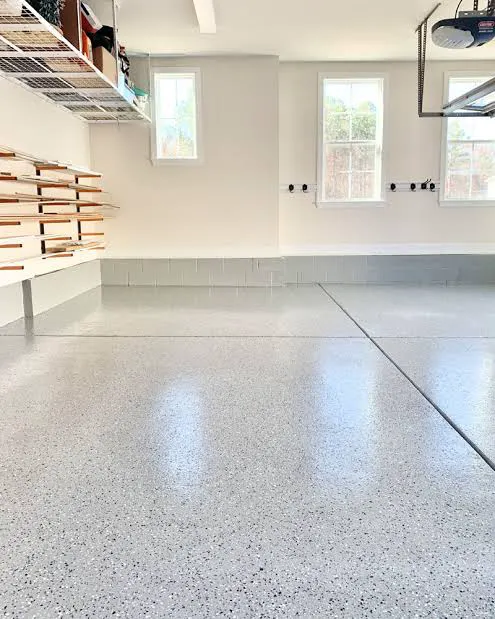
Pickup or just a tire stain?
Two different things show up where tires sit, and they need different responses. Run a fingernail over the mark and look closely at the edges.
- Tire staining: dark or yellowish marks in the shape of the tread, with the coating smooth and intact underneath. A floor coating supplier, Armorpoxy, says staining comes from plasticizers, the chemicals that keep tire rubber flexible, moving out of the tire and into the finish, and that it does not affect how the coating performs.
- Hot tire pickup: missing coating in tire-sized patches, often with bare gray concrete or a primer layer showing, and sometimes flakes or film stuck to the tire itself. This is a bond failure.
- Softening: tread-shaped impressions pressed into the coating that do not clean off. This usually means the film was not fully cured, or is too soft for the heat it sees.
Why Arizona garages are the worst case
Several things stack up in a West Valley garage in summer. The tires have been rolling on asphalt that bakes all afternoon. The car pulls straight into a closed garage that holds the day's heat, onto a slab that is warm too, and parks in exactly the same spot it parked yesterday. The tire then cools for hours against the same few square feet of coating.
Daily repetition is what turns a weak spot into a failure. One hot afternoon rarely lifts a good floor. Months of the same tires cooling on the same patch will find any area where the coating never bonded properly.
Floors that are most at risk
- Floors finished with one-part latex or latex-epoxy paint rather than a two-part system
- Thin kit coatings rolled on in a single coat
- Coatings put over smooth, unground concrete or over an old clear sealer
- Parking lanes that had oil drips or tire residue under the coating
- New floors that had cars parked on them before the coating finished curing
- Garages where heavy trucks or vehicles with wide performance tires park every day
Prevention starts with the tire lanes
The two strips where you park are not the same as the rest of the floor. Years of tires leave rubber residue and oil that soaks into the surface, and a pressure washer does not remove it. Those lanes need a degreasing pass and then mechanical abrasion along with the rest of the slab, so the coating bonds to clean, open concrete instead of to old residue.
Then comes the system itself. A two-part epoxy base bonded to profiled concrete, an optional flake broadcast, and a clear topcoat give the floor enough thickness and hardness to take a hot tire. Sherwin-Williams, for example, describes one of its commercial water-based urethane floor coatings as resisting hot-tire pickup and staining well enough that dealerships or hangars may no longer need mats under parked vehicles, which shows how much the topcoat chemistry matters for staining.
The first weeks are when floors fail
A floor that is still curing is softer than the finished film. A hot tire on a floor that is a few hours or a day short of its parking time can leave permanent impressions or lift the coating outright, and in summer the margin for error shrinks. Park only after the time the installer gives you for that specific system, and if the garage has been cool or humid since the last coat, add a day.
Habits that help after the floor is down
- Straighten the wheels before you shut off the car, so the tires are not twisted against the coating while they cool
- Sweep sand and grit out of the parking spots, since grit under a heavy tire scratches the topcoat
- Clean tire marks every week or two before they set in the heat
- Use parking pads under a collector car or a vehicle with soft performance tires if staining bothers you
- Keep drip pans or mats under any car with a known leak, so oil does not sit under the tire lanes
- Do not spin the tires pulling out on a fresh floor
If your floor is already lifting
Stop parking on the damaged spots if you can, because every hot afternoon peels the edges a little further. Look at the back of a loose piece: smooth, clean concrete on the back means the coating never bonded well, which usually means the problem is wider than the visible patches.
Spot patching rarely holds, and it shows. The lasting repair is to remove the loose and weak coating, grind the slab back to sound concrete, clean the tire lanes, repair cracks and recoat the whole floor.
What we install for parking garages
Our garage floors use Sherwin-Williams epoxy floor systems over concrete that has been cleaned, degreased, crack-repaired and profiled, including the parking lanes. Decorative flakes are optional, a clear topcoat goes over them to take the wear, and an anti-slip additive is available for entries and wet areas. We give you the parking time for your floor at the estimate so the first hot afternoon finds a fully cured film.
Frequently asked questions
- Are black tire marks on my epoxy floor a sign it is failing?
- Not by themselves. If the coating under the mark is smooth and intact, it is staining from the tire rubber and can usually be cleaned. Missing or lifted coating is the sign of a bond problem.
- Do performance tires cause more marks?
- They tend to. Armorpoxy notes that higher-performance tires contain more plasticizers, which are what cause staining, so softer, grippier tires usually leave more marks.
- Does a clear topcoat prevent hot tire pickup?
- It helps resist staining and wear, but it cannot save a floor with a weak bond to the concrete. Prep of the tire lanes and a full cure matter just as much.
- Should I let my car cool before parking in the garage?
- On a properly installed, fully cured floor that is not necessary. On a new floor, or one you are unsure about, parking outside for a while on the hottest days reduces stress on the coating.
- Can hot tire pickup be repaired with touch-up kits?
- Small touch-ups can cover a chip, but pickup usually means the bond is weak in the whole parking area. A lasting fix removes the failing coating and recoats on prepared concrete.
- Is hot tire pickup covered by flakes?
- Flakes hide stains and wear but do not stop a coating from lifting. They are locked in by the topcoat, so if the base lets go, the flakes come up with it.