Guide · Epoxy flooring
How Long an Epoxy Garage Floor Takes to Cure Before You Park
By the Orange Coatings team · Published
Most professionally installed epoxy garage floors take foot traffic in about a day and vehicles in about three days, but the real answer depends on the product and the temperature of your slab, so the number to trust is the one on that product's data sheet. Cure also happens in stages: a floor can feel hard to your shoe days before it is ready for a hot tire or a spilled can of brake fluid.
Here is what each stage means, what speeds it up or slows it down in a West Valley garage, and how to plan the days you will be parking in the driveway.
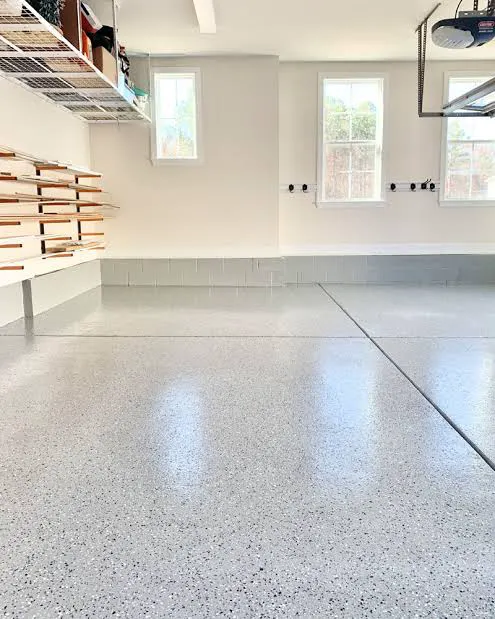
Dry is not the same as cured
Paint dries when its water or solvent leaves. Two-part epoxy cures when the resin and hardener react and link together, and that reaction keeps going long after the surface stops feeling tacky. The film gets steadily harder and more resistant to chemicals for days.
That is why there are several different waits on an epoxy data sheet instead of one. Each one marks the point where the film is strong enough for a particular kind of stress.
The stages, in order
- Pot life: the working time after the two parts are mixed. Material left in the bucket past this point starts to set and cannot be spread properly.
- Recoat window: the period when the next layer, such as flakes and a clear topcoat, can go on and bond chemically to the one below. Miss it and the surface usually has to be sanded first.
- Light foot traffic: you can walk across in clean socks or soft shoes, usually about a day on the systems we install.
- Light use: shelves, bikes and storage bins can come back once the data sheet allows.
- Vehicle traffic: cars can park, usually about three days on our systems, depending on the system and temperature.
- Full cure: the film reaches its full hardness and chemical resistance. This is the last stage, and it is when hot tires, oil and cleaners are no longer a concern for a new floor.
Why the times vary so much
Published guidance ranges widely. Concrete Network says garage coatings generally need about a week of cure before vehicles return, while some systems are rated for cars much sooner. Both can be right, because the chemistry is different from one product to the next. The factors that move the clock are:
- Slab temperature: warm concrete speeds the reaction, cool concrete slows it, and the slab often runs cooler than the air above it
- Air temperature overnight: a garage that drops sharply after dark slows cure during those hours
- Humidity and dew point: moisture in the air during cure can affect how some coatings finish, which matters in monsoon season
- Film thickness: thick layers and broadcast flake coats behave differently from a thin primer
- The product itself: fast-cure topcoats and standard epoxies follow very different schedules
What Arizona seasons do to the schedule
In summer, a closed garage in the West Valley can be well over 100 degrees by afternoon. Heat speeds the cure, which sounds helpful, but it also shortens the working time, so material can start to set before it levels. We start summer installs early in the morning, while the slab is coolest, and stay inside the temperature limits on the product's data sheet.
In winter the opposite happens. Days are mild, but a garage slab can sit noticeably cooler overnight, and the cure slows during those hours. A floor installed in January may need a little more time before parking than the same floor in May. Spring and fall are the easiest seasons, with warm days, mild nights and lower humidity than the monsoon months.
Planning the week around the install
- Empty the garage completely before the crew arrives, including shelves, the second fridge and anything on the floor.
- Plan where the cars will sleep: the driveway, the street or a neighbor's spare spot, for the full wait before parking.
- Move anything you need for the week, such as the trash bins, pool chemicals and yard tools, outside the garage first.
- Keep the garage door down while the coating cures so dust, leaves and insects stay off the surface.
- Keep kids and pets out, and use another door to get in and out of the house.
- Ask for the walk-on, move-back and park-on times in writing so everyone in the house knows them.
What happens if you park too soon
A tire on a floor that has not finished curing presses into a softer film than the one it was designed to be. The usual results are tire-shaped impressions that never fully level out, dark marks that will not clean off, and, in the worst case, the coating lifting with the tire when the car backs out. In an Arizona summer the tire arriving home is hot, which makes all of those more likely.
Chemicals are the other risk. A drip of gasoline, antifreeze or a strong cleaner on a film that is not fully cured can stain or soften it. Wait for the full-cure time before washing the floor with anything more than water.
Signs the floor needs more time
A schedule is a guide, and the floor gets the final say. Give it longer, and check with your installer, when you notice any of the signs below. An extra day is far cheaper than repairing tire marks in a brand-new floor.
- The surface feels tacky, or a fingernail pressed into an edge leaves a mark
- A shoe or sock leaves a print or a dull spot
- The floor smells strongly of coating after the expected cure time
- The garage has been cold, or a storm brought humid air, since the last coat went down
How we set your cure times
We install Sherwin-Williams epoxy floor systems over cleaned, degreased, repaired and profiled concrete, with optional decorative flakes, a clear topcoat and an anti-slip additive. Because cure depends on the system and the conditions, we give you the walk-on and parking times for your floor at the estimate, and we schedule the install around temperature and humidity so the coating cures correctly.
Frequently asked questions
- Can I walk on epoxy the next day?
- Usually yes for light foot traffic, about a day after the final coat on the systems we install. Wear clean socks or soft shoes and keep heavy items off until the data sheet allows.
- How long before I can put my car back in the garage?
- On our systems it is usually about three days, depending on the product and the temperature. Other products may call for a week or more, so follow the data sheet for the coating on your floor.
- Does a fan or the AC make epoxy cure faster?
- Airflow helps clear odor, but blowing air also carries dust onto a wet floor. Temperature is what changes the reaction speed, and it should stay inside the range on the product label.
- Can I mop a new epoxy floor during the first week?
- Sweep or dust-mop only until the full-cure time has passed. Water and cleaners can mark a film that has not finished curing.
- Why does my epoxy floor still feel soft after two days?
- A cool slab, cool nights or high humidity can slow the cure. Keep traffic off and check with your installer before parking on it.
- Is winter a bad time to install an epoxy garage floor in Arizona?
- No, mild winter days work well. Cure can be a little slower when the slab is cool overnight, so the parking wait may run longer than in late spring.